
Nine Guests Flagged Allergies. The Kitchen Heard About Three.
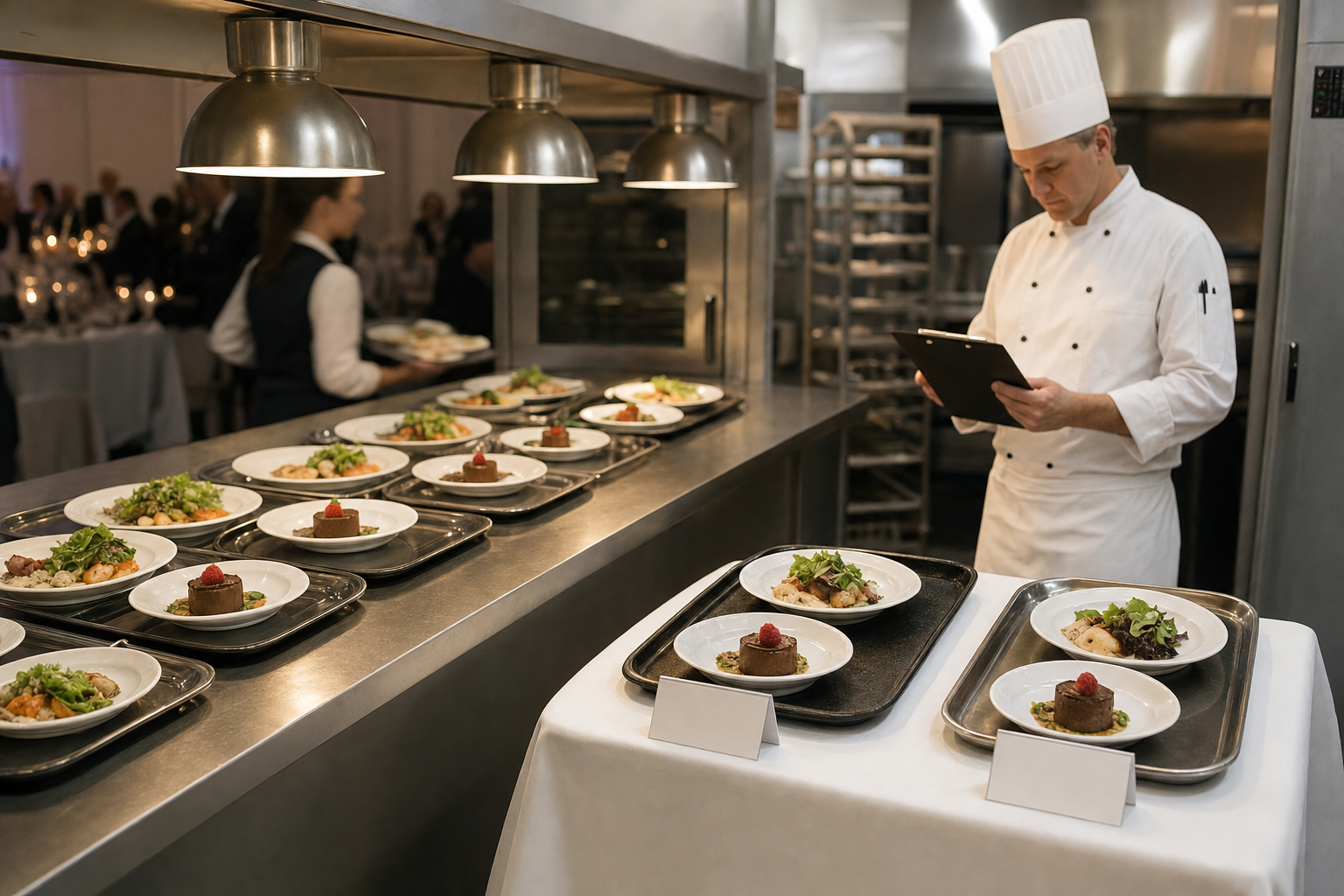
The information exists. It stops moving.
Ask a caterer where the allergy details live and you'll get four answers. The RSVP spreadsheet. A reply buried in the planner's email thread. A note someone made on the phone six weeks ago. And one guest who mentions it to a server while the starter is being set down.
By service day, all of that has to become a decision about which plate goes to seat 7. The person making that decision is moving fast, standing up, and holding something hot.
The prompt
Build the Dietary and Allergen Plan for an Event Before Service handles the paperwork half. You give it the menu with ingredients, the guest count, the service style and whatever the client returned on dietary requirements. Back comes the matrix, the separation steps, the label wording and the brief you read to the service team.
A worked example
90-guest awards dinner, plated, three courses. The client returns 2 nut allergies, 1 coeliac, 4 vegetarian and 1 dairy-free. 11 guests answered nothing at all.
Menu: chicken and wild mushroom starter, beef with dauphinoise, chocolate torte.
What you get back:
- A requirement count that treats the 11 blanks as a planning job, with spare portions already costed in.
- A dish-by-dish matrix naming allergens exactly. The torte line reads "contains milk, egg, wheat, soya", because the tin was dusted with flour and the chocolate carries soya lecithin. The mushroom sauce line flags celery in the stock. The garnish line flags pine nuts in the pesto oil.
- Three adapted plates, each with the name of the person making it.
- Separation steps: those three plated first, covered, carried on their own tray, set down on a marked table at the pass.
- A 60-second service brief. Table 4 seat 2 and table 11 seat 6, what they're getting, and the words to use when a guest asks what's in something ("I'll check the sheet and come straight back" beats a guess every time).
- Six questions to send the client at the 72-hour headcount lock.
Where the value sits
The hidden sources, first. Flour on the cake tin, celery in the stock, soya in the chocolate. Those are what get missed, because nobody reads the back of the stock tub at 4pm on a load-out day.
Then the blanks. 11 non-responders on a 90-cover job is a completely normal return rate. Planning for them turns a service-day scramble into 3 spare portions sitting in the van.
And the handoff. A plan that stays in the chef's head does nothing for the server putting the plate down. The 60-second brief and the printed label wording are the parts that travel from the kitchen to the floor.
How to run it
- Paste the menu dish by dish with ingredients. Include sauces, oils, garnishes and anything bought in. The output is only as good as the ingredient list you give it.
- Add the client's dietary returns exactly as they arrived, blanks and all, plus your kitchen setup and whether the venue has one.
- Run it, then work through every line where it tells you to confirm a supplier spec. It raises those deliberately. They're the emails to send today.
Grab it here: Build the Dietary and Allergen Plan for an Event Before Service.
Two more from the same set if you're costing or contracting the same job: Price a Catering Job Per Head and Keep the Margin Intact and Write Catering Terms That Stop Final Headcount Surprises.