
Satellite Solar + Savings Report
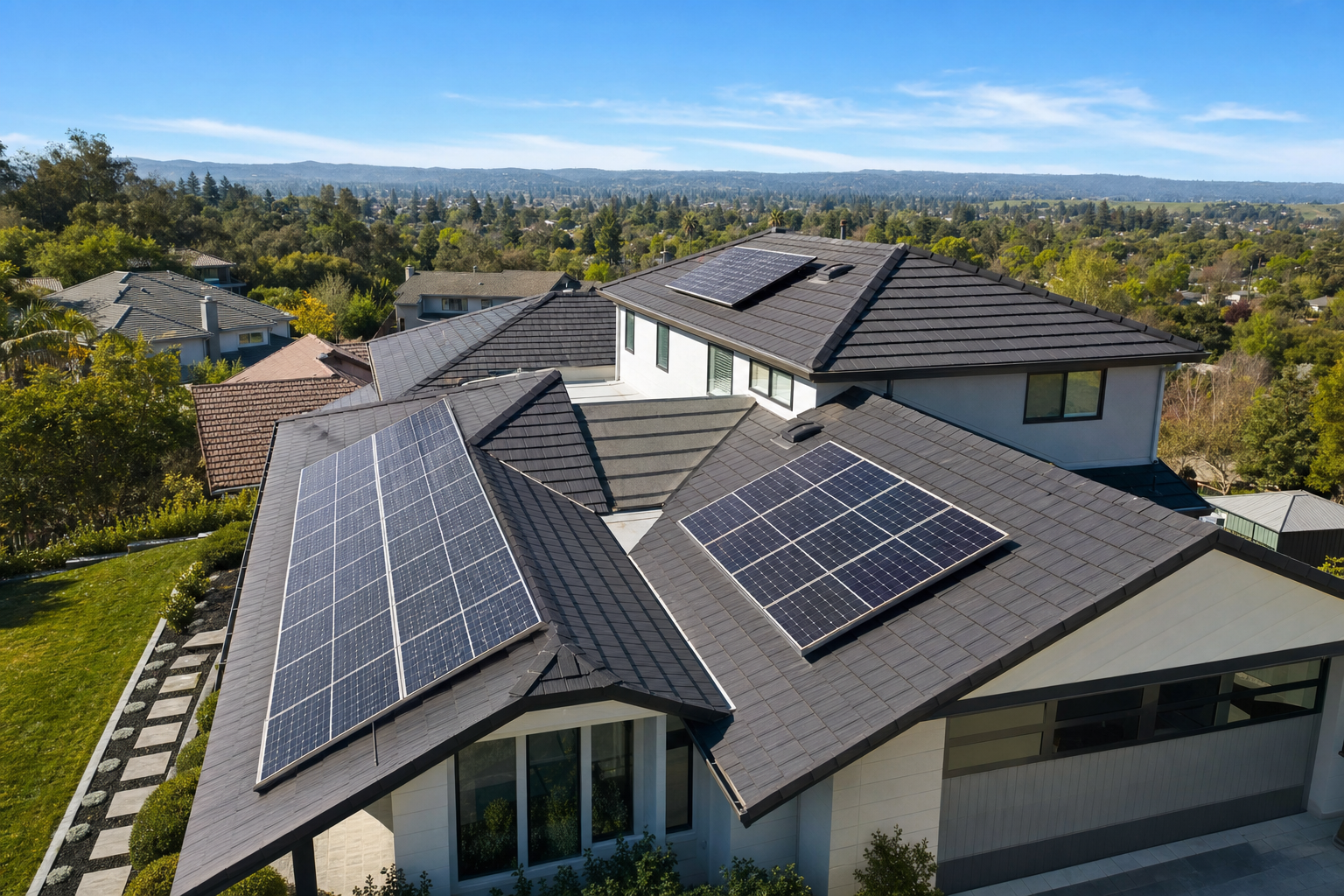
The problem: solar companies are paying canvasser prices for internet-era leads
Ask any solar installer what a closed deal actually costs them and you'll get a number between $1,500 and $3,000. That's not ad spend. That's fully loaded cost per acquisition, after you count the door-to-door canvasser's commission, the lead aggregator's per-lead fee (often $50 to $150 a pop, most of which never convert), and the sales rep's time chasing homeowners who filled out a form because they wanted "more information," not because they were ready to sign a contract.
For a company doing 5 to 30 installs a month, that math adds up fast. At the low end, 10 installs a month at $2,000 per acquisition is $20,000 a month just to keep the pipeline full, before payroll, permitting, or a single panel goes on a roof. And the lead quality problem compounds the cost problem: a generic contact form or a canvasser's clipboard pitch produces a homeowner who is curious. It doesn't produce a homeowner who has already seen their own roof with panels on it and a specific dollar figure attached to owning versus not owning solar.
That gap between "curious" and "sold on the math" is exactly what an engineering-grade instant report closes. Prompt-King.AI's Solar Installers blueprint, Satellite Solar + Savings Report, is built to skip the generic lead form entirely and put a homeowner in front of a rendered image of their actual house with solar panels on it, a specific system size, and a 25-year savings number, all before a human salesperson ever picks up the phone. That changes the sales conversation from "let me tell you about solar" to "here's what solar already looks like on your roof, want to talk about financing."
Everything below walks through how this actually works. If you'd rather skip to building it, the full Solar Installers Satellite Solar + Savings Report blueprint is live on Prompt-King right now, ready to run.
How the blueprint actually works
The tool is described on the product page as a five-stage flow: address in, satellite imagery pulled, roof analyzed by a vision model, panels rendered onto the image, savings calculated across three financing paths, and a paid consultation booked at the end. Here's what each of those stages is doing under the hood, and why the sequencing matters.
Address entry. The homeowner doesn't fill out a ten-field lead form. They type one address. That's the entire friction point at the top of the funnel, and it's deliberate: every extra field between "I'm curious" and "I see my roof" is a homeowner who bounces before they ever see the payoff.
Once the address is submitted, the app calls Google Maps Platform to pull a high-resolution satellite or aerial image of the property. Google gives new accounts $200 of monthly platform credit, and for a small to mid-volume solar company, that credit covers a meaningful chunk of the imagery calls before any real cost hits the business. This is the step that makes the whole pitch land: the homeowner isn't looking at a stock photo of a generic house, they're looking at their own roof, from above, seconds after typing their address.
Next comes the part that actually separates this from a static image with a panel graphic slapped on top: vision analysis. The satellite image gets sent to a vision-capable model, OpenAI or Anthropic depending on how the builder wires it up, and the model is asked to read the roof the way a solar estimator would. That means identifying which roof planes face the directions that matter for solar exposure, flagging obstructions that cause shading (trees, chimneys, HVAC units, dormers), and estimating the usable square footage once you subtract vents, ridges, valleys, and setback requirements. This is the step doing the real engineering work, and it's also the step the build brief warns will need refinement passes to get the JSON parsing and roof-plane detection reliable, because vision models are good at "there's a roof there" and need tuning to get consistently good at "this specific plane is usable and that one isn't."
Once the usable area and orientation are known, the app renders solar panels visually onto the satellite image itself, positioned across the identified usable planes. This is the moment that does the emotional work of the whole funnel. A savings number on a spreadsheet is abstract. A picture of panels laid across your actual roof, generated in the time it takes to read a paragraph, is not. It's the difference between a quote and a preview.
From there the tool moves into the financial engine: usable area and orientation feed into an estimated system size, that size gets multiplied against local solar hour data to project annual production, and the app runs a 25-year comparison of doing nothing (paying an escalating utility bill) against going solar. Crucially, it doesn't just spit out one number. It splits the projection across three financing paths, because the "should I go solar" decision and the "how do I pay for solar" decision are two different objections, and homeowners get stuck on the second one constantly:
- Cash purchase - the largest upfront cost, but the largest lifetime savings, since the homeowner owns the system outright and captures the full 25-year offset plus any available tax credit.
- Loan - little to no money down, a fixed monthly payment that's typically still lower than a rising utility bill, with lifetime savings reduced by the interest paid over the loan term.
- Lease (or PPA) - zero or near-zero upfront cost and immediate lower monthly outgoings, but the smallest lifetime savings, since the leasing company owns the system and usually claims the tax credit itself.
Showing all three side by side does something a single "you'll save $X" number can't: it lets a homeowner who can't write a $20,000 check still see a path to yes. That's a huge share of the market a canvasser pitching only the cash price simply loses.
The funnel closes with a consultation booking that requires a $99 deposit. That single detail is doing more strategic work than it looks like at first glance. A free "book a call" button gets clicked by anyone mildly curious, most of whom no-show or waste a sales rep's afternoon. A $99 deposit filters for homeowners who have already looked at the rendered panels and the 25-year number and decided this is worth committing real money to before they've even spoken to a person. For the solar company, every booked consultation is pre-qualified in a way no aggregator lead ever is, and the $99 itself offsets a slice of the tool's operating cost.
A worked example: walking a homeowner through it
Picture a homeowner in Scottsdale, Arizona, on a single-story home with a straightforward gable roof. She's been getting solar mailers for two years and ignoring all of them. Then she sees a Facebook ad from her local installer with a link to check her own roof, types her address into the landing page, and hits enter.
Within a couple of seconds the satellite image of her house loads on screen, close enough that she can make out her own driveway and pool. The vision model has already gone to work in the background, and a moment later panels appear overlaid across her south-facing roof plane, the one with almost no tree shading, while the smaller east-facing section over her garage stays bare because the model flagged it as suboptimal. That distinction alone builds trust: the tool didn't just blanket her whole roof in panels for effect, it made a judgment call, and it's a judgment call that matches what she can see with her own eyes.
The analysis lands on a 380 square foot usable roof area and proposes a 24-panel system at 400 watts each, a 9.6 kW array. Scottsdale sees strong solar irradiance, so at roughly 1,650 kWh produced per installed kilowatt per year in that climate, the system is projected to generate around 15,800 kWh annually, comfortably covering a typical household's usage. Her current utility rate works out to about $0.14 per kWh, so she's spending roughly $1,960 a year on electricity tied to that usage today, a number that only goes up as Arizona utility rates climb.
Then the three financing numbers appear. Run the math with reasonable, illustrative assumptions and it looks something like this:
| Financing path | Upfront cost | Approx. 25-year savings |
|---|---|---|
| Cash purchase | ~$20,000 after tax credit | ~$58,000 |
| Solar loan | $0 down, ~$259/mo | ~$46,000 |
| Lease | $0 down, ~$180/mo | ~$24,000 |
She doesn't own a spare $20,000, but she does have a mortgage and a car payment, so the loan row is the one she stares at: a payment lower than what her power bill will likely be in five years, locked in today, with $46,000 saved over the life of the system. That's the moment the tool has done its job. It has turned "solar is probably a good idea eventually" into a specific number attached to a specific roof and a specific payment she can compare against a bill she already pays. She clicks through, pays the $99 deposit, and books a Thursday afternoon slot. The rep who calls her isn't starting from scratch. He's starting from a homeowner who has already run her own numbers and decided the loan path works.
Who should build and sell this, and what it actually costs
This isn't a weekend side project for someone who has never touched an AI builder before. Prompt-King classifies it as Medium difficulty and Vision-Based, and the stated build estimate is 12 to 18 minutes for the initial pass through the master prompt, with the honest caveat that real-world builds need follow-up refinement passes on panel alignment, the savings chart rendering, parsing the vision model's JSON output cleanly, and populating state-level utility rate data so the projections aren't generic. Budget more like a day or two of iteration to get it production-ready for a paying client, not fifteen minutes.
None of that refinement work starts from a blank page. The master prompt itself already lays out the five-stage flow, the vision-model JSON schema, and the financing math, so what you're doing during those follow-up passes is tuning an existing build, not inventing one from scratch.
The tool stack is straightforward and cheap to run relative to what it produces:
- An AI builder like Lovable on its Builder plan, starting around $50 a month
- Google Maps Platform for the satellite imagery, with $200 of free monthly credit
- OpenAI or Anthropic for the vision analysis, running roughly $0.005 per analysis
- Stripe for the $99 consultation deposit, at the standard 2.9% plus $0.30 per transaction
- Twilio for SMS confirmations and reminders, around $0.008 per message after the trial credit
Add it up and the marginal cost of running this for a client, per homeowner who runs the tool, is a fraction of a cent to a few cents. That matters enormously once you look at the published pricing: a $2,000 setup fee and a $497 monthly retainer. A solar company running even modest volume through this tool is paying under $500 a month for something whose actual compute cost is close to nothing, which means almost the entire retainer is margin for whoever builds and maintains it.
The client math is even more lopsided in the builder's favor. A company currently paying $1,500 to $3,000 per closed deal, on deals worth $15,000 to $40,000 each, only needs this tool to influence a single extra close every couple of months to make the $497 retainer look free. If it does what it's designed to do, filtering tire-kickers out with a $99 deposit and putting genuinely warm, pre-qualified homeowners in front of sales reps, it should influence a lot more than one close a month for a company doing 5 to 30 installs.
That gap between what the tool costs the client and what a single closed deal is worth is exactly where a smart builder should think beyond the flat retainer. The published pricing on Prompt-King is a setup fee plus a monthly retainer, nothing more. But given that a single solar install can be worth $15,000 to $40,000, a builder pitching this to a real solar company has room to add a performance component on top, something like a $250 to $500 success fee per deal that closes and can be traced back to a consultation the tool booked. On a deal that size, that fee is a rounding error to the solar company and barely dents their margin, but it changes the builder's own economics completely. Instead of $497 a month flat, you're looking at $497 plus a cut of every closed deal the tool helped source, and because the tool already tracks who paid the $99 deposit and booked through it, attribution isn't guesswork, it's built into the funnel by design. For a builder running this for even two or three solar clients, that structure turns a modest maintenance retainer into something closer to a genuine revenue share in an industry where deal sizes make even a small percentage meaningful.
Every number in this section, the $2,000 setup fee, the $497 retainer, the $0.005-per-analysis cost, is pulled straight from the live listing on Prompt-King, not a hypothetical projection.
Why this is worth building now
The blueprint is marked Ready on Prompt-King, not experimental, not in beta. The build complexity is honestly labeled Medium rather than oversold as a fifteen-minute miracle, and the tool stack behind it, Google Maps, OpenAI or Anthropic vision, Stripe, Twilio, is the same infrastructure a thousand other apps already run on reliably, not some fragile new API that might change underneath you next quarter.
What makes it worth building now specifically is the arithmetic that's already sitting on the product page: solar companies spending $1,500 to $3,000 per closed deal, on installs worth $15,000 to $40,000, running at a scale of 5 to 30 a month. That's not a niche with thin margins where a $497 monthly tool is a hard sell. That's an industry where the cost of customer acquisition is already painfully visible to every owner, and where a tool that can visibly cut it, by turning a cold form-fill into a homeowner who has already seen panels on her own roof and picked a financing path before she talks to anyone, sells itself in the first five minutes of a sales call. You're not pitching a nice-to-have dashboard. You're pitching the exact thing that replaces a $2,000 canvasser with a couple hundred dollars of API calls a month, and every solar installer on your prospect list already knows precisely what their canvassers cost them.
The blueprint is live now. Get the Solar Installers Satellite Solar + Savings Report and you can have a working funnel in front of a real solar client this week instead of next quarter.