
The Estimate Said 'O/S Lower Arm Bush'. The Customer Said No.
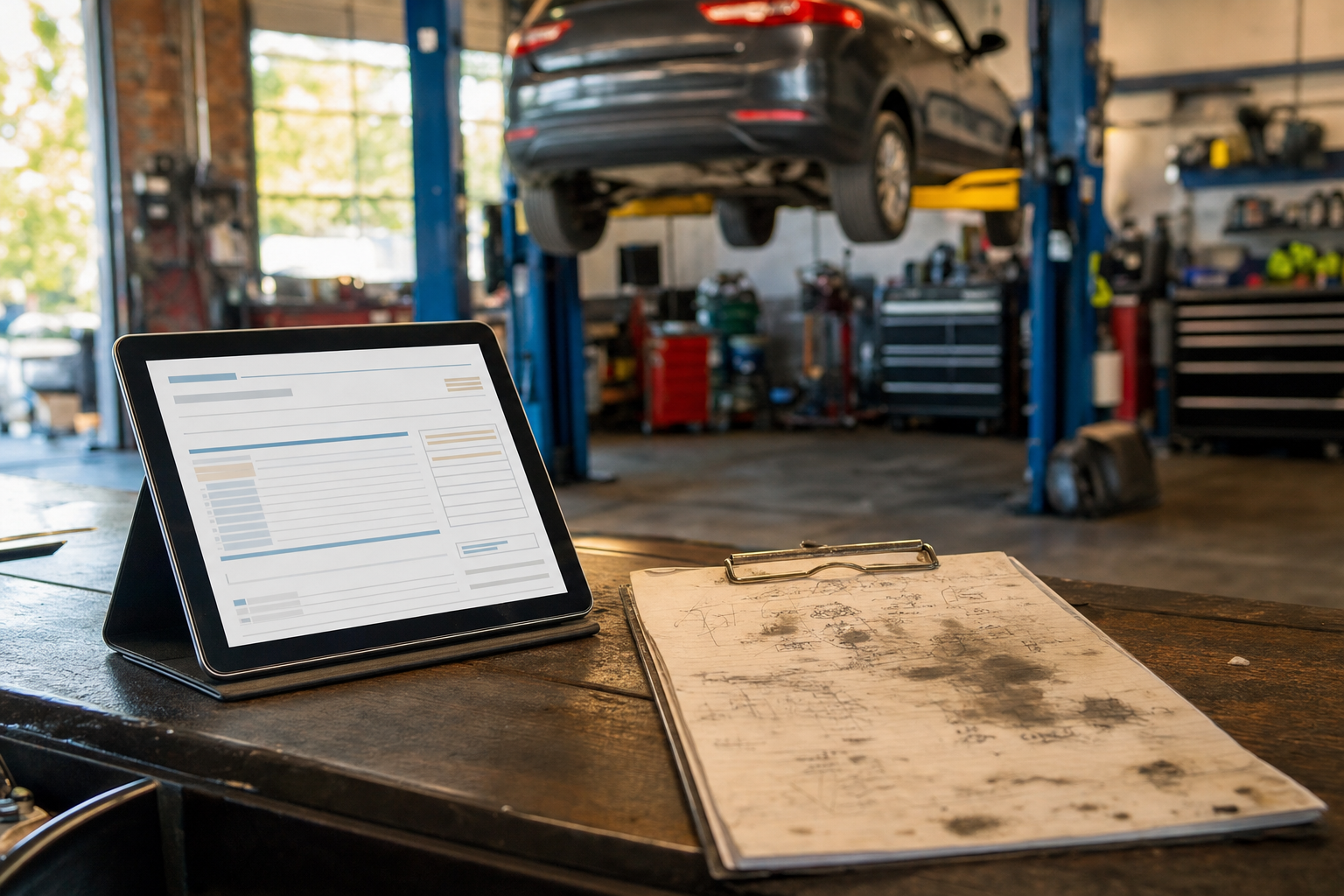
A technician spends 40 minutes on a vehicle health check and writes seven lines of shorthand. "O/S front lower arm bush perished. N/S drop link knocking. Rear pads 3mm, discs lipped. Aircon weak, needs regas and dye test."
Every word of that is accurate. None of it means anything to the person holding the invoice.
So the estimate goes out as a list of part names and a total at the bottom. The customer can't tell which line keeps the car on the road and which one can wait until spring. Faced with a decision they can't read, most people say the same thing. Leave it for now.
Then they book the brakes in somewhere else three weeks later, because the second garage explained it.
The prompt
Turn a Technician's Notes Into an Estimate Customers Approve sits between the inspection sheet and the customer. You paste in the raw notes, your labour rate, and your parts prices. It gives you back an estimate split into three buckets: Safety (do now), Recommended (do soon), and Monitor (watch it).
Each line gets one sentence on what's wrong, one on what happens if it waits, and a price. The Safety total goes on its own line, so the customer sees the real decision instead of one scary number.
What comes out the other side
Feed it the shorthand above on a 2018 Focus with 74,000 miles, and the rear brakes land like this:
| Section | Job | What it means | Price |
|---|---|---|---|
| Safety | Rear brake pads and discs | Your rear pads are down to 3mm of the 12mm they start at, and the discs have worn a lip at the edge. Braking distances get longer from here, and once the pads run out the discs are scrap too. | £285 |
| Recommended | Nearside front drop link | The link that connects the suspension to the anti-roll bar has play in it. That's the knock you hear over speed bumps. It won't strand you, but it'll fail the next MOT. | £95 |
| Monitor | Air conditioning | The aircon is still blowing cold but weaker than it should. Worth a regas before next summer. We'd add a dye test to find the leak first. | £140 |
Same work. Same prices. The customer can now make three separate decisions instead of one impossible one.
Where the money is
Two places.
The first is approval rate on safety work. When the brake job is the only thing in the Safety box with its own subtotal, it stops competing with the aircon regas for the same £500 in someone's account. People approve the brakes and defer the rest, which is the right outcome for both of you.
The second is the argument you don't have later. The prompt flags any line where the price could move once the part is off the car, and says by how much. A customer who was told in writing that the rear discs might add £60 if they're seized doesn't leave a one-star review when they do.
There's a time saving too, maybe 10 minutes per estimate. That's the smallest part of it.
How to run it
- Load your prices once. Paste your labour rate and your usual parts markup into the prompt before you use it on a real job. Keep that version saved so you're not retyping it every morning.
- Give it the notes raw. Abbreviations, missing punctuation, all of it. The translation work is the whole point, so cleaning the notes up first wastes your time and loses detail.
- Read the Safety section out loud before you send it. If a sentence in there needs a second sentence to explain it, send it back and ask for plainer words. That section is the one the customer reads twice.
Grab the prompt here: Turn a Technician's Notes Into an Estimate Customers Approve.