
The Wedding Photo Revenue Most Studios Never Collect
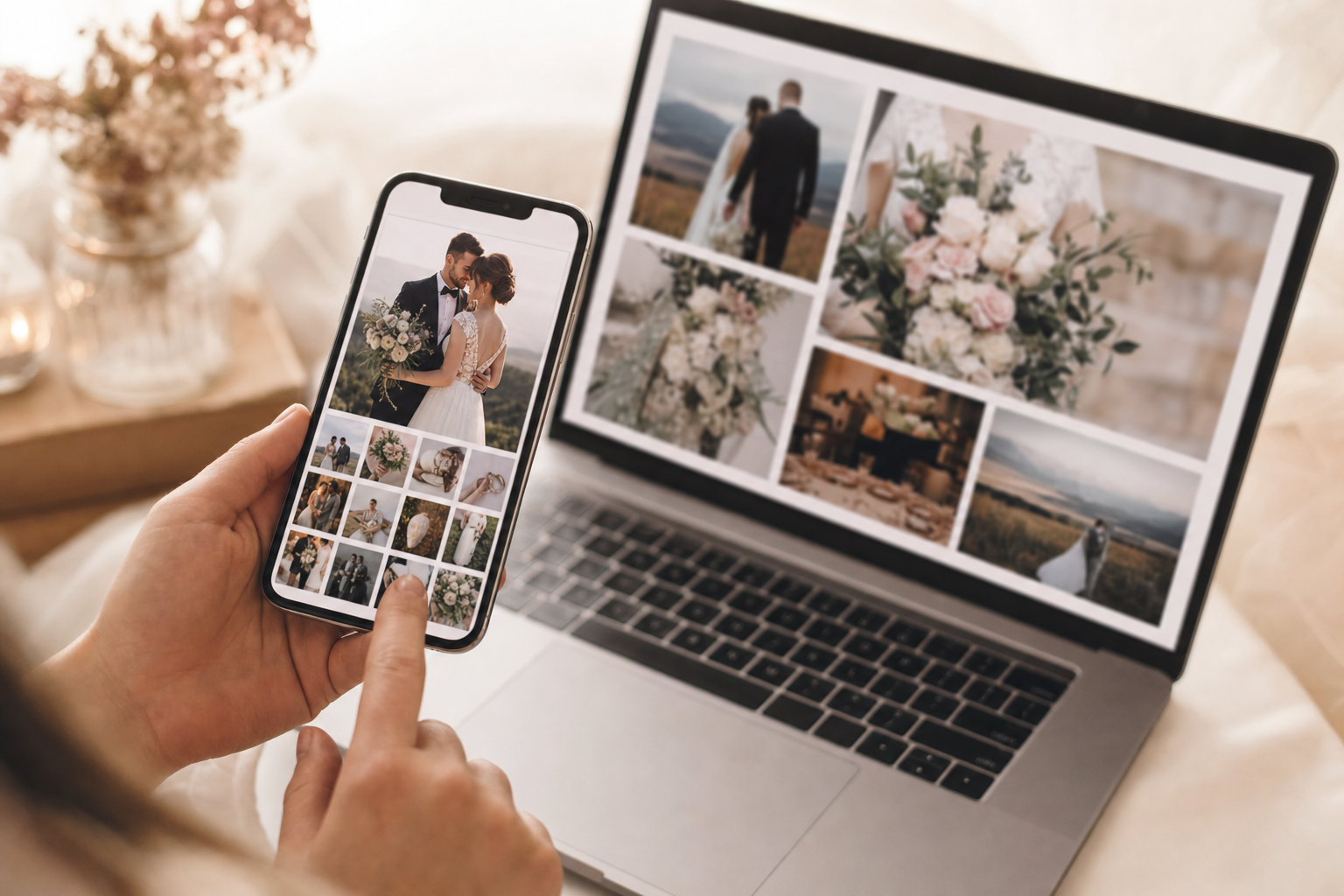
A couple gets married in June. Their photographer delivers the gallery in late July, six weeks later, the industry average. By then the excitement of the day has faded into ordinary life, the honeymoon photos on their phone have taken over their attention, and the single generic "order your prints here" email that arrives with the gallery gets a glance and gets ignored. The photographer did excellent work. The revenue sitting in that gallery mostly stays uncollected.
Want to build the tool that fixes both halves of this problem? The Client Gallery Delivery & Print Revenue Upsell tool delivers galleries fast and sequences personalized print offers timed to when a client actually cares, instead of one email sent into a gallery nobody's excited about anymore.
It's worth naming why this problem is so widespread despite how obviously valuable the fix is. Photographers are hired for their eye and their editing, not their sales sequencing, and running a proper multi-touch, personalized upsell campaign by hand for every single client simply doesn't scale past a handful of bookings a month. That's not a failure of effort. It's a genuinely time-consuming task that automation is well suited to, freeing the photographer to spend their limited hours on the actual craft rather than manually tracking who favorited what and when to follow up.
Two numbers every studio should already know
Galleries delivered within 14 days see a 25% higher print sale conversion rate and generate 35% more word-of-mouth referrals than slower deliveries. Separately, studios running an automated print sales sequence generate 3.2 times more print revenue per client than studios handling upsells manually. Most studios are losing on both fronts at once. The average wedding gallery still takes 6 to 8 weeks to deliver, well past the point where client excitement has cooled, and the upsell ask, if it happens at all, is a single generic email rather than a sequence timed to actual behavior.
These two numbers aren't unrelated. A client who's still excited when a gallery lands is a client who responds to a well-timed print offer. A client who's moved on isn't going to be won back by better copywriting in that same generic email. Speed and sequencing solve the same underlying problem from two directions.
How the blueprint actually works
The mechanism starts before the full gallery is even ready. Within a day or two of the shoot, the photographer uploads a small sneak peek, five to fifteen hero images, which goes out immediately as a branded notification. This does two things at once: it keeps the client engaged during the weeks the full edit takes, and it gives the studio something worth mentioning that most competitors don't offer, a sneak peek within 48 hours instead of silence for six weeks.
When the full gallery is ready, the delivery-speed clock the studio dashboard tracks kicks in against that 14-day benchmark. The client browses, favorites, and downloads images from any device, no login required, and every favorite and view gets tracked. That tracking data drives the actual upsell mechanism: instead of a generic product catalog blast, the sequence references the client's own most-favorited image specifically. An opening offer goes out the moment the gallery opens, a mid-window touch highlights their top-favorited shot with a matching product suggestion, and a closing message adds real urgency, an early-bird pricing deadline, timed before the standard selling window ends.
That sequencing pattern, three touches spaced across a few weeks rather than one blast, is the specific mechanism behind the 3.2x revenue difference. It's not that automation makes the offer more persuasive on its own. It's that a client who ignores the first touch still sees a second one built around a different angle, their favorite image, and a third with genuine urgency, three chances instead of one, each more targeted than the last.
None of this asks a photographer to change how they shoot or edit. It only changes what happens to the finished work after it leaves their hands, which is exactly the part most studios have never had time to systematize properly.
A worked example
Picture a wedding studio delivering a $3,800 package. Two days after the wedding, the couple gets a text with a sneak peek of twelve images, including the first kiss and the group shot everyone's already asking to see on social media. They share two of them immediately. Eleven days later, comfortably inside the 14-day benchmark, the full gallery of 600 edited images arrives.
The bride spends twenty minutes that evening favoriting forty images, heavily weighted toward a set of golden-hour portraits by the lake. The opening upsell offer goes out the next morning, then three days later a message arrives highlighting that exact lake portrait with a suggested canvas print at $150. She hadn't planned to buy prints yet, but seeing her actual favorite framed as a specific product, not a generic "order now" banner, is what prompts the purchase. Ten days later, a closing message notes the early-bird album pricing window closes in 48 hours, and she adds a $1,800 heirloom album to complete the order. None of this required a phone call or a manual follow-up from the studio.
Both numbers driving this build come from the same underlying truth: a client's attention and goodwill toward their photographer are highest in the days right after their event, and decay steadily from there. Every part of this system, the sneak peek, the fast full delivery, the sequenced upsell, exists to act while that attention is still there instead of after it's gone.
The pricing tiers this naturally supports
Once the tracking exists to show a photographer exactly how much print revenue a given gallery generated, it opens a pricing conversation that's hard to have without that data. A studio can see, gallery by gallery, whether their $1,800 heirloom album is actually converting at the rate they assumed, or whether a lower-priced product is doing most of the real work while the premium option sits mostly unpurchased. That visibility tends to reshape a studio's own product catalog over time, sometimes toward fewer, better-positioned options rather than a long list of underperforming choices nobody asked to build in the first place.
Who should build and sell this, and the real economics
The right buyer is a photography studio or independent photographer, wedding, portrait, or event specialists, currently delivering galleries slowly with little or no structured upsell beyond a single generic email. The clearest signal is a photographer who knows their print revenue is a fraction of what it could be but has no time to chase each client individually.
Setup runs $2,400 to $3,600, covering the build and configuring the product catalog and upsell sequence around the studio's actual pricing. The monthly retainer runs $297 to $447, covering hosting, notification costs, and ongoing tuning as real conversion data comes in. Given how directly this ties to revenue, a performance-based structure is worth leading with: a lower base retainer around $197 a month plus a small percentage of print and product revenue processed through the app, an easy sell given the proven 3.2x automation effect backing it.
Start with the studio's next few real bookings rather than retrofitting this onto already-delivered galleries. That gives you a genuine before-and-after comparison on print revenue per client using the studio's own numbers, which is far more persuasive in the next sales conversation than an industry statistic alone.
What makes this different from a generic gallery platform
Off-the-shelf gallery platforms already handle photo delivery and even basic print sales, so it's worth being precise about what this blueprint adds beyond that baseline. A generic platform sells the same catalog to every client the same way, an unopened email with a product grid attached. What actually drives the 3.2x revenue difference is tying the offer to what a specific client actually favorited in their own gallery, sequenced across multiple touches rather than a single ask, and paired with a delivery-speed discipline that most generic platforms have no reason to enforce since they're not measuring the studio's turnaround time against an industry benchmark at all. A studio already using a generic gallery tool isn't necessarily capturing any of that, even though the surface-level feature, a gallery with prints for sale, looks similar.
What to actually expect when you build this
The gallery and purchase mechanics are the easy part. The upsell personalization is what actually matters, and it's tempting to ship with one generic "here are some prints" message instead of building the favorited-image logic properly. Resist that. The personalization is the entire mechanism behind the revenue difference the blueprint is built to capture, not a nice-to-have layered on top.
Test the delivery-speed tracking against how studios actually work, since a photographer batch-editing three weddings at once needs each gallery's clock tracked independently, not a single shared studio timer that gets confused by overlapping projects. Once the base build is solid, expect requests for a referral-request touch added right after a successful purchase, since a client who just bought something is primed to recommend the studio, along with seasonal product bundles and, for studios with more than one shooter, a comparison view of delivery speed and revenue across photographers.
Handling the "my clients already buy prints fine" objection
Some photographers will push back that they already sell prints, they don't need a whole system for it. That's often true in a narrow sense, a handful of clients out of every batch will ask for prints unprompted regardless of what the studio does. The gap this tool closes is the much larger group who would have bought something if the offer had actually reached them at the right moment with the right image attached, and who simply never followed through on a single generic email sent weeks after their excitement peaked. A studio that's "doing fine" on prints from unprompted requests alone is almost certainly leaving the 3.2x difference on the table entirely, since that number specifically compares automated sequencing against exactly the ad hoc approach most studios are already running.
Why the sneak peek matters beyond the referral bump
It's worth separating what the sneak peek actually does from what the full gallery delivery does, since they solve different problems. The full gallery, delivered inside the 14-day window, is what drives the print conversion and referral numbers directly. The sneak peek does something else: it buys the studio time. A client who's already seen and shared two or three hero images within 48 hours of their event is far more patient about waiting the normal turnaround for the full edit, because they've already gotten something real, rather than sitting in silence wondering if their photos turned out well. That patience matters practically, since rushing a full edit to beat an anxious client's expectations is exactly how quality slips.
Why now
Photography studios already have the asset that drives this revenue, a gallery full of images a client genuinely loves. What's missing in most studios isn't better photos, it's the speed and sequencing that turns that gallery into revenue instead of a one-time delivery. Both numbers behind this build are already proven in the industry data. The only question is whether a studio captures them or keeps leaving that revenue on the table one slow, generic delivery at a time.
The full blueprint, including the complete master prompt, the favorited-image upsell logic, and the ten-step build and nine-step launch phases, is live on Prompt-King now. If you know a photography studio still delivering galleries slowly with no real upsell sequence, this is the build that turns their next batch of bookings into a measurable revenue increase.
None of the numbers here are theoretical. They're published industry benchmarks any studio can measure themselves against, starting with their very next delivery.
Get the Client Gallery Delivery & Print Revenue Upsell blueprint now and have it ready before the studio's next shoot.