
The Pickup Summary That Tells Parents Almost Nothing
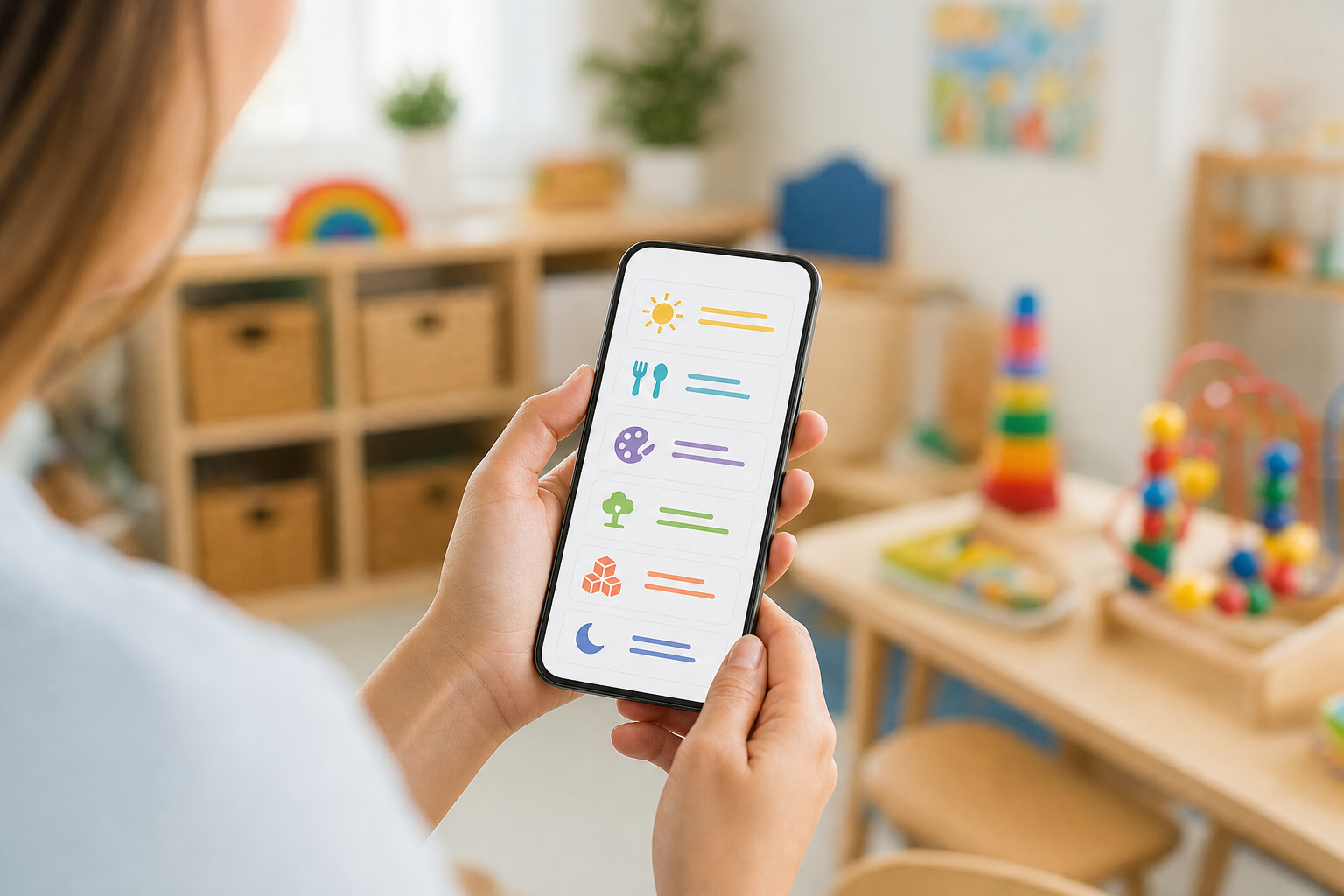
Pickup time at most daycares looks the same everywhere. A tired parent, a tired staff member, and a thirty-second summary of eight hours: "She had a good day, ate her lunch, took a nap." That's it. No detail on what she actually ate, how long the nap ran, whether anything worth mentioning happened at 2pm. The parent drives home with a vague sense their kid was fine and no real picture of the day.
Want to build the tool that fixes that gap? The Daily Check-In & Parent Communication Hub lets staff log a child's day as it happens, meals, naps, diaper changes, photos, pushed to parents in real time instead of reconstructed from memory at pickup.
It's worth sitting with why the pickup conversation, of all things, ends up being where trust either gets built or gradually erodes. It's the one moment every single day where a parent and the center interact directly, and right now, for most centers, it's rushed, thin on real detail, and dependent on whichever staff member happens to be free at that exact minute, not a place trust erodes loudly, just gradually, one thin pickup conversation at a time.
Why this is a retention lever, beyond a nice-to-have
Parents in 2026 expect real-time visibility into their child's day. Photos, instant updates, digital records of naps and meals, not a rushed verbal summary. Centers that deliver this consistently see it show up directly where it matters most financially: parent engagement is one of the strongest levers for year-over-year re-enrollment, since a parent who feels genuinely connected to what's happening during the day trusts the center more and is far less likely to shop around when renewal time comes.
The gap between centers that nail this and those that don't isn't about which staff care more. It's whether logging a diaper change takes five seconds during the day or gets reconstructed from memory at 5pm while three other parents are also waiting for their summary.
How the blueprint actually works
The staff side is built to be fast, deliberately. Throughout the day, a caregiver logs a meal, a nap, a diaper change, or snaps a photo of an activity, each taking a few taps, without breaking away from supervising children. The moment that event gets logged, it pushes straight to the child's parent. A parent checking their phone at 11am sees what happened at 11am, not a compressed version hours later.
Incidents get handled with real weight. A fall, a bite, anything requiring documentation gets logged with a photo and a description of the care given, and it requires explicit parent acknowledgment before the day's records count as complete. That protects the center's documentation as much as it informs the family, since a report nobody confirms reading is a liability sitting unresolved in the system.
Attendance drives billing directly. Check-in and check-out timestamps calculate the invoice automatically against each family's actual rate, full-time, part-time, or drop-in, and late pickup fees apply consistently based on the real clock instead of staff discretion in the moment. No more reconciling a paper sign-in sheet against a spreadsheet at the end of the month.
None of this asks staff to change how they care for children. It only changes what happens to the details of that care afterward, whether they get captured as they happen or reconstructed from memory under time pressure.
A worked example
Picture a toddler room with twelve children. By 9:30am, three kids have already had their morning snack logged, timestamped, with a note on what they actually ate. At 12:15, a nap starts for one child and automatically closes at 2:00 when she wakes, no staff member needing to remember to log the end time manually.
At 1:45, another child takes a small tumble on the play mat. The lead teacher logs it immediately with a photo of the (minor) scrape and a note that ice was applied. The parent gets a push notification at work, opens it during a break, reads the details, and taps to acknowledge. By pickup, there's nothing left to explain verbally, the parent already knows exactly what happened and when. The teacher's actual pickup conversation is warmer and more personal, because it isn't carrying the burden of being the only source of information about the whole day.
What the acknowledgment requirement actually protects
It would be simpler to build incident reporting as a one-way notification, staff log it, parent gets a text, done. The explicit acknowledgment step adds friction on purpose, and that friction is the point. Without it, a center has no clean record of whether a parent actually saw an important report, which matters both for the parent's trust and for the center's own liability if a concern ever gets raised later about whether they were properly informed. A tap to confirm reading takes a parent two seconds. It gives the center something a text message alone never provides: a documented, timestamped record that the loop closed.
The absence-pattern flag most centers never catch manually
One detail worth building carefully is the admin-facing flag for children enrolled full-time but showing an unusual pattern of absences. This sounds like a minor reporting feature, but it surfaces something most directors only notice anecdotally, if at all: a family disengaging gradually, well before they formally withdraw. Catching that pattern early, while there's still a real chance to have a conversation about what's changed for the family, whether it's a scheduling conflict, a financial strain, or dissatisfaction they haven't voiced directly, is worth more than any single feature elsewhere in the build. Losing an enrollment is expensive. Losing it without ever knowing it was coming is worse.
Who should build and sell this, and the real economics
The right buyer is a daycare or childcare center running somewhere between 30 and 150 enrolled children, currently relying on verbal pickup updates or a paper sign-in sheet, with no real parent communication system, or one parents stopped checking months ago because it's clunky.
Setup runs $3,200 to $4,800, covering the build and configuring room structure, billing rates, and late pickup policy. The monthly retainer follows the market's existing pricing pattern for parent-communication tools, $2 to $8 per enrolled child, which lands around $150 to $500 a month for a 60-child center, a familiar and easy number for an owner to compare against what generic platforms already charge. Given how directly this ties to retention, a performance bonus tied to measured re-enrollment improvement against the center's own prior-year numbers is worth proposing, since the entire pitch rests on exactly that outcome.
Start with a single room as a pilot, not the whole center. Adoption depends heavily on active onboarding, centers that walk families through setup at drop-off see dramatically higher adoption in the first 60 days than centers that just send a link and hope, and a smaller pilot group makes that hands-on onboarding manageable.
Why active onboarding matters more than the software itself
It's tempting to treat launching this as a technical rollout, get the app live, send parents a link, done. The data on adoption tells a different story. Centers that actively walk families through setup, at drop-off, in person, during the first week, see dramatically higher adoption than centers that simply announce the tool and hope people find it. The gap between those two approaches isn't small, and it directly determines whether the retention benefit this build is meant to deliver actually materializes. A perfectly built app that half the parents never open doesn't move the re-enrollment number at all. Budget real time for hands-on onboarding, beyond the build itself.
What to expect when you build this
The logging interface is where this build lives or dies. If logging a meal or a diaper change takes more than a few seconds, staff will stop doing it consistently without anyone deciding to, and the whole value proposition collapses along with it. Time the actual logging flow during testing, beyond confirming it technically works.
Test the real-time push on a real phone, since that's how staff will use this on the floor, not a desktop browser during development. And build the incident acknowledgment flow to fail loud, not quiet: an unacknowledged report needs to surface to admin after a reasonable window rather than sitting indefinitely with nobody noticing. Once the base build is solid, expect requests for an end-of-year photo memory book export, waitlist management for centers with more demand than space, and a link into whatever accounting system already handles payroll and tuition.
Handling the "our staff are already stretched thin" objection
Some center directors will worry that adding a logging system is one more task piled onto staff who are already at capacity managing a room full of young children. That concern is worth taking seriously, and it's exactly why the speed of the logging interface matters more than any other design decision in this build. Staff aren't asked to write a paragraph or fill out a form, they're tapping a few options that take roughly the same time as glancing at a clock to note when a nap started. Framed honestly, this replaces a task that was already happening informally, remembering details to relay at pickup, with one that takes less mental effort because nothing needs to be held in memory until 5pm.
What separates this from a generic childcare management platform
General childcare management software already covers attendance, billing, and often some form of parent messaging, so it's fair to ask what this build adds beyond an existing system. The difference is in the granularity and immediacy: a generic platform treats a "daily report" as a single end-of-day form staff fill out once, which reintroduces the exact memory-reconstruction problem this build is designed to eliminate. Logging events as they happen, in real time, throughout the day, rather than compiling them retroactively, is the specific mechanism tied to the engagement and retention numbers behind this pitch. A center that already has generic software isn't necessarily getting that benefit just because a "daily report" feature exists somewhere in the product.
Why now
Childcare is one of the most trust-dependent purchases a family makes, and trust is built or lost in exactly the small daily moments this tool captures: a photo, a timely update, a documented incident handled well. A center that makes those moments visible in real time isn't just running better operations. It's directly protecting the re-enrollment revenue that keeps the business healthy year over year.
The full blueprint, including the complete master prompt, the real-time logging and billing logic, and the eleven-step build and ten-step launch phases, is live on Prompt-King now. If you know a childcare center still relying on a paper sign-in sheet and a rushed pickup summary, this is the build that turns their daily communication into a measurable retention advantage.
Every design choice in this build traces back to the same goal: capture the day as it happens, close the loop on anything that needs a parent's attention, and let the numbers on attendance and billing take care of themselves instead of needing a manual reconciliation every month.
Get the Daily Check-In & Parent Communication Hub blueprint now and have a pilot room ready to configure this week.