
Auto Glass Shops, VIN-Based ADAS Calibration Quote Tool
A customer enters their VIN or snaps a photo of it, and the tool automatically works out whether their windshield replacement needs a $150-$600 ADAS camera recalibration, then gives an honest tiered quote before they ever call the shop.
This blueprint is free. Copy the master prompt below, build it with your own time, and the only outlay is a few low-cost tool subscriptions. Use it inside your own business, or sell it to clients. The numbers further down are what you can charge, not what you pay.
The Windshield Job Was Never Just Glass
Read the articleWho you sell it to
Independent and small-chain auto glass replacement shops doing 15+ jobs a month, especially ones competing against national chains with slicker online quote tools. The best-fit shop already knows calibration is a real part of the job but currently prices it by guesswork or a phone conversation, and either underquotes it (eating the cost themselves) or skips mentioning it until the customer is already in the chair, which reads as a bait-and-switch. A shop owner who says some version of 'half my customers don't even know their car needs calibration until we tell them at drop-off' is the exact sales conversation this tool solves.
If you sell it, here is the money picture:
The first tile is the value of your client's own jobs, which is the reason they will pay you. The other two tiles are what you charge them.
How it works
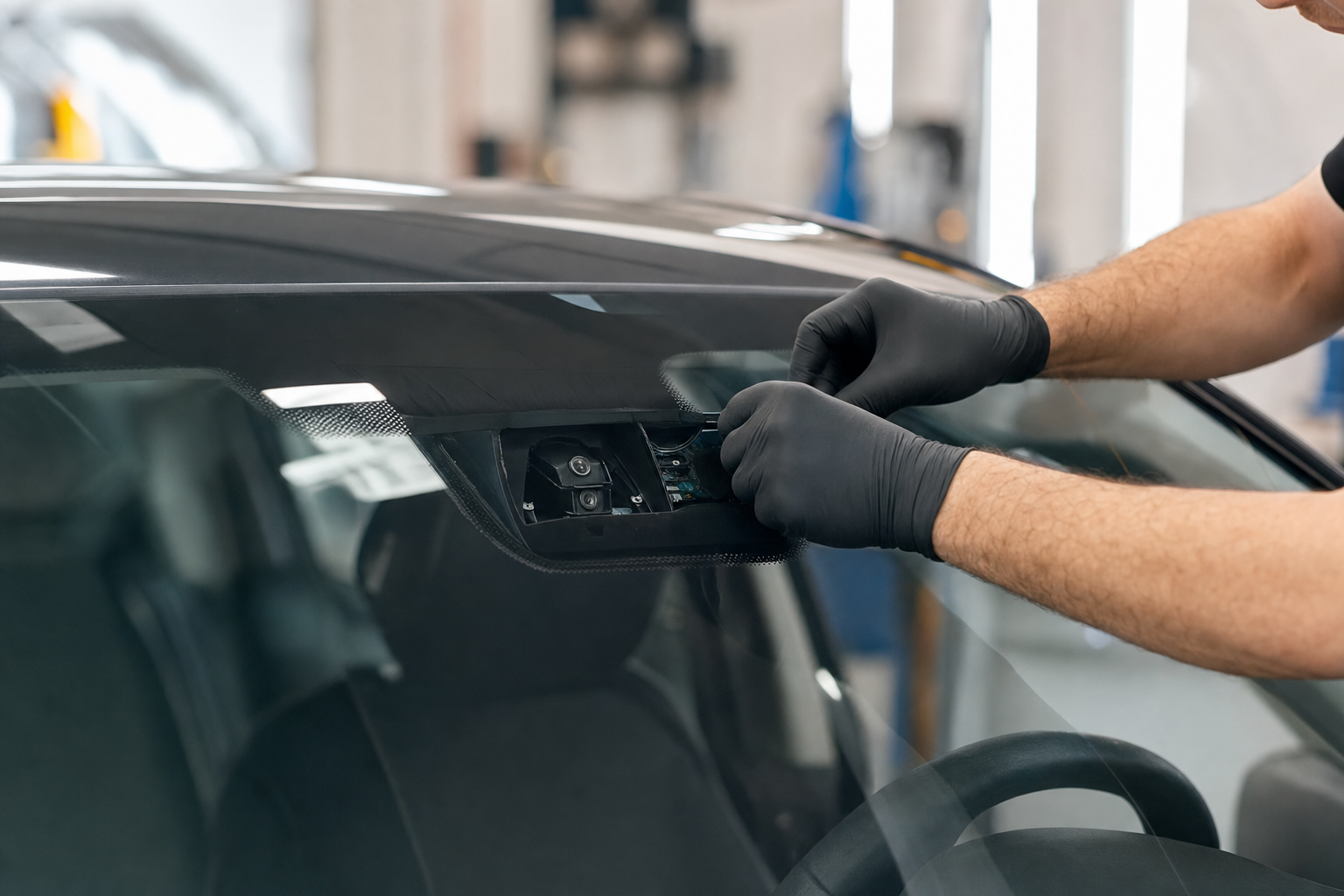
Modern windshields aren't just glass anymore. Since roughly 2018, a growing share of vehicles have a forward-facing camera mounted behind the rearview mirror that reads lane markings and other vehicles for lane-keep assist and automatic braking. Replace the windshield and that camera comes off and goes back on in a slightly different position, which means it has to be recalibrated afterward, either with a stationary target board in the bay (static calibration), a supervised test drive with a scan tool connected (dynamic calibration), or both (dual calibration).
Skipping this, or doing it wrong, leaves the safety system reading the road inaccurately. The tool asks a customer for their vehicle's VIN (a photo of the dashboard VIN plate, visible through the windshield, or the driver's door jamb sticker works fine, or they can type it in), decodes it against the free NHTSA vehicle database to get the exact year, make, model, and trim, then checks that against a built-in reference table of which of those vehicles ship with a forward camera and which calibration method that camera needs. A couple of quick yes/no questions (is there a small black camera housing behind your rearview mirror, does your dash have a lane-keep or forward-collision warning light) catch the edge cases the VIN alone doesn't settle.
From there it produces one of four honest quote tiers: glass-only for a vehicle with no camera, glass plus static calibration, glass plus dynamic calibration, or glass plus dual calibration, each with a real price range, and texts the shop the decoded vehicle details plus the recommended calibration type before the customer even arrives, so the tech shows up with the right target board or scan tool already loaded instead of finding out mid-job.
What to expect
Most of the value shows up in two places: fewer surprised customers at drop-off (which is where calibration upsell resistance and one-star reviews both come from), and fewer wasted trips where a tech arrives without the calibration equipment a car actually needed. The VIN-to-camera lookup table needs real calibration itself in the first month: it ships pre-seeded with the most common ADAS-equipped models (most mainstream Toyota, Honda, Subaru, and GM vehicles from 2018 onward), but a shop's actual mix of makes will surface a few models worth adding by hand within the first few weeks. Expect the shop to flag two or three vehicles the tool got wrong in month one; treat that as the system learning their specific customer base, not a failure.
This does not replace a technician's own visual confirmation of the camera at drop-off, and the tool should say so plainly rather than presenting itself as a substitute for a trained eye.
Master prompt
You are an expert full-stack builder. Build a production-ready tool that… (the complete master prompt, custom input fields, build phases, pricing guidance and sales script are part of this blueprint.)
Build phases
Required tools
NHTSA vPIC VIN Decode API
Free, public US government API that decodes any VIN into year/make/model/trim, no API key or account required.
Free
Sign upTwilio
Sends the instant SMS lead alert to shop staff with decoded vehicle and calibration details.
~$1.15/month per number plus ~$0.0079/SMS in the US
Sign upAppBuild.DIY (Vibes)
Wraps the finished Lovable build into a real native iOS and Android app plus a PWA, with native push notifications for instant lead alerts and native Photos/Camera access for the VIN photo capture step.
Free to start, then $49-$99/month
Sign up