
Landing page prompts: free template + 4 AI prompts

Landing page prompts work best when you give the AI a page structure to fill. Ask for "a landing page" and you get a generic block of copy. Give it the sections, the visitor, the traffic source and your proof, and you get a page that turns more of your clicks into calls, trials and sales. This guide gives you a free landing page copy template, four copy-paste AI prompts that fill it, a worked example and a launch checklist.
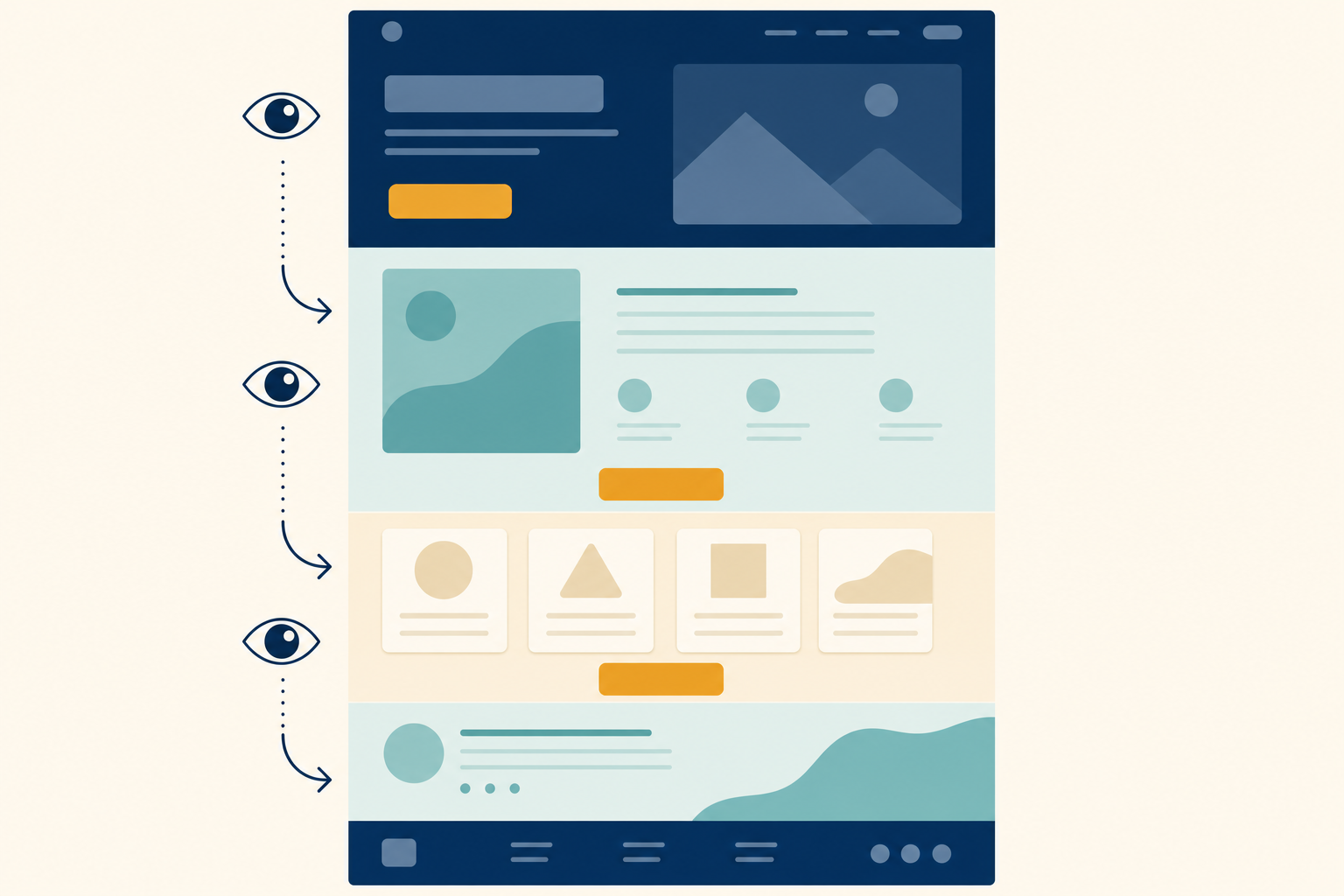
What a landing page needs before you write a word
Five facts decide whether a landing page converts. Get them down first and the copy almost writes itself:
- One goal. Book a call, start a trial, buy or download. A page with three goals usually gets none of them.
- The visitor. A specific person, such as "self-employed builders doing their own books". "Small businesses" is too broad to write for.
- The promise that got the click. The exact words in the ad, email or search term. Your headline has to continue that sentence.
- Their biggest worry. Price, time, switching or "will it work for me?" The page has to answer it before the button.
- Your proof. Numbers, named testimonials, reviews and logos. AI can write the sentences around proof. It can't invent proof you don't have.
Free landing page copy template
Copy this into a doc, fill in the top five lines, then use the prompts below to write each section. The order follows how a visitor reads: what is this, is it for me, how does it work, can I trust it, what's the catch, what do I do now.
LANDING PAGE COPY TEMPLATE

Page goal (one action only): [book a call / start a trial / buy / download]
Visitor: [who they are], arriving from [ad / email / search term / social post]
They already believe: [what they know or want]
Their biggest worry: [the reason they might leave]
The promise that got the click: [exact words from the ad, email or search]

1. HERO (what shows before anyone scrolls)
Headline: the outcome they get, in their words, under 10 words
Subhead: who it's for and how it works, in one line
Button: verb + what they get ("Get my quote", "Start my free week")
Trust line under the button: [rating / number of customers / guarantee]
Visual: the product or the result in use

2. THE PROBLEM
Three short lines in the visitor's own words about what's going wrong today

3. HOW IT WORKS
Three steps. For each: what they do, what happens next, how long it takes

4. WHAT YOU GET
4 to 6 bullets, each written as: feature -> what it means for them

5. PROOF
One specific result: number + timeframe + type of customer
2 or 3 testimonials, each naming the doubt that customer had before buying
Logos, ratings or accreditations

6. QUESTIONS PEOPLE ASK BEFORE THEY BUY
The 4 to 6 real objections: price, time, switching, risk, "will it work for me?"

7. THE OFFER
What's included, the price or a "from" figure, the guarantee or free first step

8. FINAL CALL TO ACTION
Restate the outcome, repeat the same button text, say what happens after the click

FORM: only the fields you need for your first reply
Want a designer to build it? Once your copy is drafted, the landing page design brief prompt turns it into a section-by-section brief with layout, visual direction and mobile notes, so the designer works with your real words. Prefer to write the copy yourself first? Prompt 1 below does that.
Prompt 1: write the whole page from the template
Use this when you have your five facts and want a complete first draft. The rule about [ADD PROOF] stops the AI inventing testimonials, which is the fastest way to lose a visitor's trust.
You are a conversion copywriter. Write the full copy for my landing page using the template below. Fill every section with finished copy I can paste straight into my page builder.

My details:
- What I sell: [product or service, in plain words]
- Page goal (one action): [book a call / start a trial / buy / download]
- Who visits: [the specific person, e.g. "self-employed builders doing their own books"]
- Where they come from: [Google Ads keyword / Meta ad / email / organic search]
- The exact promise in that ad, email or search: [paste it]
- What they worry about most before buying: [price, time, switching, trust]
- Proof I have: [numbers, testimonials with names, reviews, logos]
- Price or starting price: [figure or "free first step"]
- Guarantee or risk reversal: [refund terms, free trial, no contract]

Rules:
1. The headline must continue the promise from the traffic source, using the visitor's words.
2. Write at a reading age of about 12. Short sentences. No jargon.
3. Every feature bullet must say what it means for the visitor.
4. Use only the proof I gave you. Where proof is missing, write [ADD PROOF] so I can fill it.
5. The same button text appears in the hero, after the proof and at the end.
6. Keep the whole page under [word count, e.g. 700] words.

Then give me:
- 3 alternative headlines, each using a different angle (outcome, pain, speed)
- The one section you think is weakest given my proof, and what I'd need to make it stronger

TEMPLATE:
[paste the landing page copy template]
Prompt 2: write a hero that matches the click
Most visitors decide in a few seconds whether to stay. If your ad says "VAT done for you" and your headline says "Professional accounting solutions", they leave. This prompt writes the top of the page from the exact words that brought them there.
You are a direct-response copywriter. I need the top of my landing page to match the exact reason people clicked.

Traffic source and the exact words they saw or searched: [paste ad copy, email subject or search term]
What I sell: [one line]
Who clicks: [the visitor]
What they want in the next 5 minutes: [e.g. a price, proof it works, a quick booking]

Write:
1. 5 headline options under 10 words. Each must repeat or directly answer the promise from the traffic source.
2. A subhead for each that says who it's for and how it works.
3. 3 button texts that start with a verb and name what the visitor gets.
4. One trust line to sit under the button, using only this proof: [paste proof].
5. Pick the strongest combination and explain in two sentences why a first-time visitor would stay.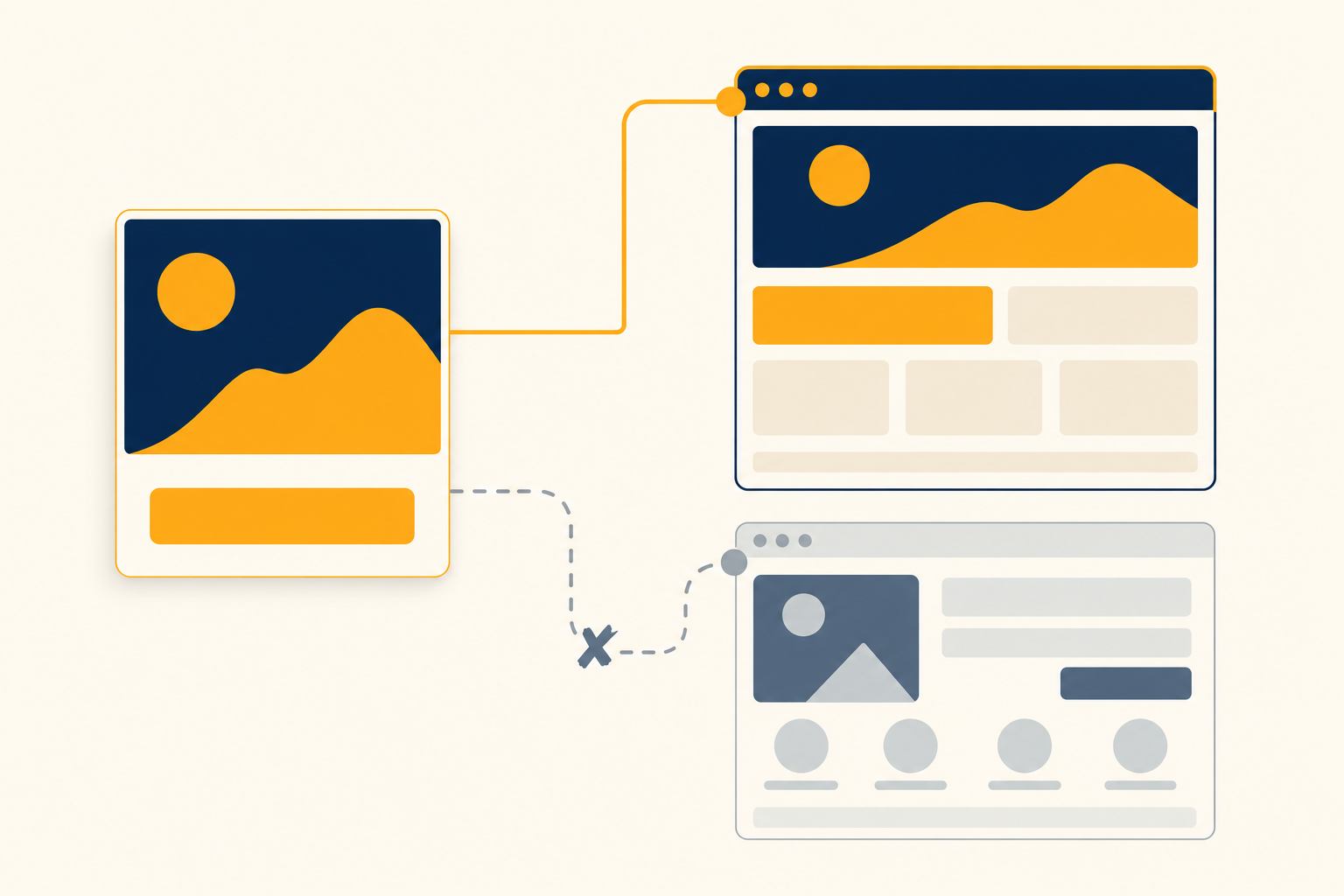
For a deeper check on a page that's already live, the ad-to-headline message match prompt scores how well your current page continues the ad. Our story The ad cost $4 a click and the landing page threw it away shows what that gap costs.
Prompt 3: turn objections into page sections
The questions people ask on sales calls are the questions your page visitors have and never ask. They just leave. Paste the real objections, in your customers' words, and this prompt places each answer where it does the most work.
You are a sales lead who has heard every objection to my offer. Turn my buyers' doubts into page sections that answer them before they leave.

What I sell: [product or service]
Price: [price or range]
Who buys: [buyer]
Objections I hear on calls, in emails or in reviews: [paste them in the customer's words]
Proof I can use: [results, testimonials, guarantees, case studies]

For each objection:
1. Rewrite it the way the visitor would think it, in under 12 words.
2. Write a 2 to 3 sentence answer that uses a specific fact or proof point.
3. Say where it belongs on the page: hero trust line, how it works, proof, FAQ or offer.
4. If a testimonial already answers it, quote the line to use.

Finish with the FAQ section in final copy, objections ordered from most to least common.
If one objection keeps winning, write a case study built around it with the case study that answers one objection prompt, then quote it in your proof section.
Prompt 4: test the page as a first-time visitor
Run this before you send any traffic. It reads your page cold, the way a stranger from your ad will, and tells you where they'd stop.
Act as a first-time visitor to my landing page. You've just clicked from [traffic source] after seeing: [the ad, email or search term].

Here's my page copy, in order from top to bottom: [paste the full page copy]

Answer honestly:
1. After 5 seconds on the hero only: what do you think I sell, who is it for, and what should you do next?
2. Is there anything in the hero that doesn't match what you clicked on?
3. Where would you stop reading, and why?
4. Which question would you still have when you reach the button?
5. Rewrite the one sentence that would make the biggest difference, and tell me which section it belongs in.
Worked example: a bookkeeping page for builders
Here's the template and prompts applied to a small bookkeeping firm running Google Ads to self-employed builders. Notice how the hero reuses the words from the ad and how the trust line answers the "shoebox of receipts" worry straight away.
Worked example: a bookkeeping service for builders, traffic from Google Ads

Inputs
- Sells: monthly bookkeeping and VAT returns for self-employed builders
- Goal: book a 15-minute call
- Ad the visitor clicked: "Bookkeeper for builders. Receipts in a photo, VAT done for you."
- Worry: "I've got a shoebox of receipts and I'm behind. Will they judge me, and will it cost a fortune?"
- Proof: 140 trade clients, 4.9 on Google from 86 reviews, one client caught up 14 months in 3 weeks

Hero
Headline: Snap your receipts. We'll do the books and the VAT.
Subhead: Monthly bookkeeping for builders and trades, done from photos on your phone.
Button: Book my 15-minute call
Trust line: 4.9 on Google from 86 trades. Behind on your books? Most clients start that way.

Problem
- Receipts in the van, the glovebox and a carrier bag
- VAT deadline next month and no idea what you owe
- Evenings spent on spreadsheets when you should be resting

How it works
1. Book a 15-minute call. We look at where you are, with no judgement.
2. Send receipt photos on WhatsApp. Takes seconds after each job.
3. We do the books every month and file your VAT. You get one summary.

Proof
"I was 14 months behind and expected a telling-off. They had me caught up in three weeks." Dean, groundworks, Derby

Objection answered in the FAQ
"Am I too far behind?" No. Most of our clients start with a backlog. We price the catch-up up front so there are no surprises.

Final CTA
Get your evenings back this month. [Book my 15-minute call]
After you book: you get a text confirming the time, and we call you from a local number.

What changed versus their old page
Old headline: "Professional accounting solutions for small businesses". Nothing about builders, receipts or VAT, so it broke the promise from the ad. The new hero repeats "builders", "receipts" and "VAT" from the ad, and the trust line answers the shoebox worry before the visitor has to ask.
Prompts for each type of landing page
The template fits most pages. These prompts handle the cases where the page has a special job:
- Selling a product: the product sales landing page prompt writes features, an about section and FAQs with CTAs in the right places.
- Selling a course: the online course sales page prompt builds the lesson list, testimonials and about section.
- Growing an email list: the lead magnet landing page prompt writes the opt-in page for a free guide, including form copy and a privacy line.
- Winning searches in your town: the local service area landing page prompt writes a page for "[service] in [place]".
- Taking on a competitor: the comparison landing page prompt writes an honest "us vs them" page.
- Pricing pages: the SaaS pricing page prompt answers the biggest pricing objection before the reader asks.
After launch: find what's stopping conversions
- Give it real traffic. Wait for at least a few hundred visits before you judge the page.
- Find the one problem. The landing page conversion audit prompt names the single biggest point of friction. Fix that before anything else.
- Check the button. If people scroll past it, the CTA copy or placement prompt tells you whether to rewrite it or move it.
- Test one change at a time. When the results come in, the A/B test results prompt checks whether the winner is real before you roll it out.
- Look at the whole funnel. For a full review of the journey from click to sale, run the CRO audit prompt.
Which page do you need?
This guide is for writing the words on your landing page: the structure, the copy for each section, and the checks before and after launch. If your copy is ready and you need a designer to build the page, use the landing page design brief prompt. If the offer itself is weak, no copy will save it: work through Build an irresistible offer with 7 prompts first, starting with the one-sentence value prompt.
Mistakes that cost landing page conversions
- A headline about you. "Welcome to Acme" tells the visitor nothing. Lead with what they get.
- Breaking the promise from the click. If the ad mentions a price, a speed or a feature, the hero has to mention it too.
- Proof buried at the bottom. Put one trust line under the first button. Most visitors never reach the testimonials section.
- Too many choices. One goal, one button text, repeated. Remove the main menu if your builder allows it.
- A long form. Every extra field loses people. Ask only for what you need to reply.
- Invented testimonials. AI will happily write fake quotes. Visitors spot them, and so do regulators.
Write your landing page today
Fill in the five facts at the top of the template, run Prompt 1, then fix the hero with Prompt 2. Run Prompt 4 before you spend a penny on traffic. When the copy is final, hand it to your designer with the landing page design brief prompt.
For more prompts like these, with the method behind them, get the free Prompt King Handbook. It shows you how to get better results from ChatGPT, Claude and Gemini for your pages, offers, emails and the rest of your business.