
Restaurant Reservation No-Show Killer
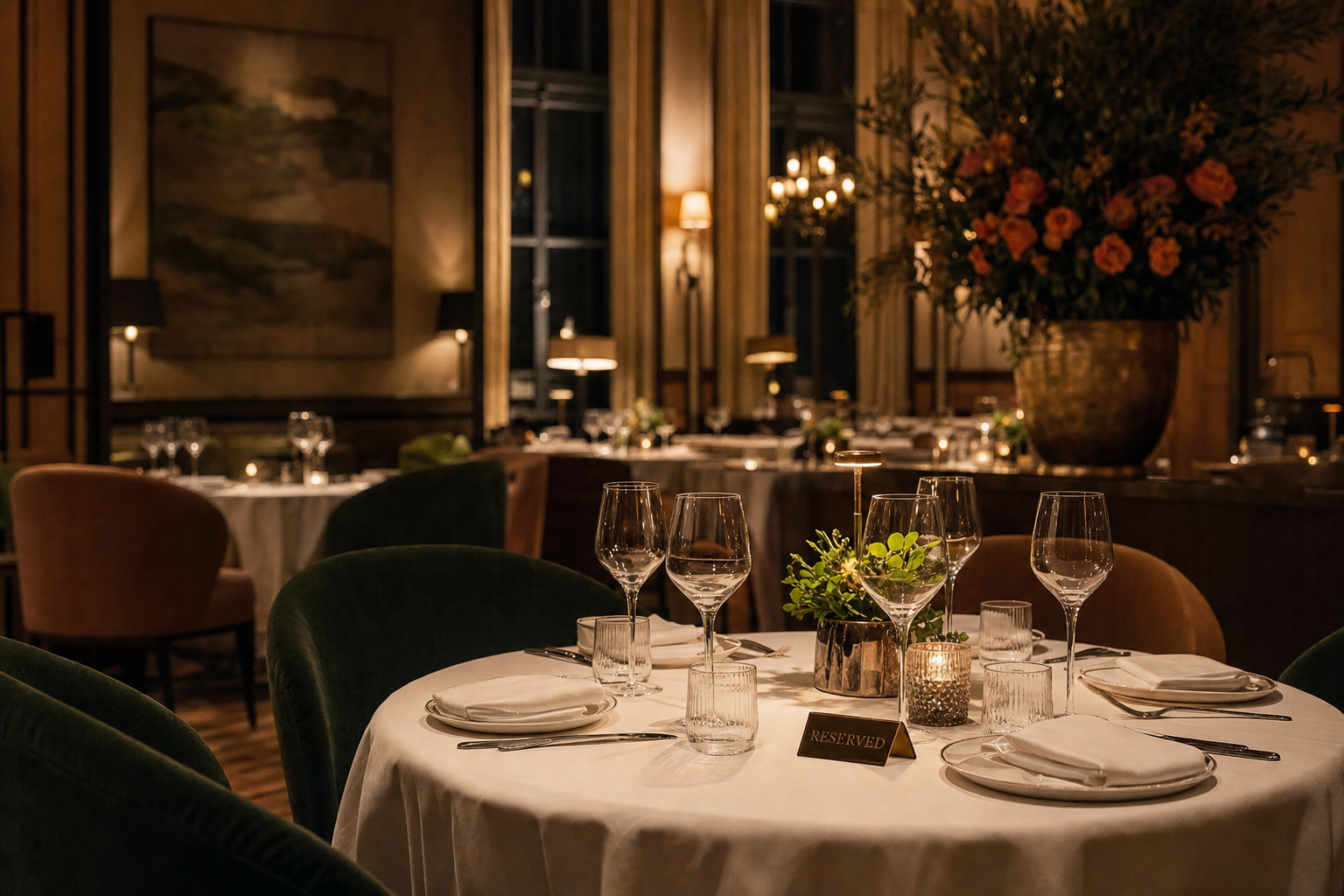
A mid-sized restaurant running 30 reservations a week at a $60 average check loses more than it thinks it does to no-shows. Run the math on a typical 5 to 8 percent no-show rate: two or three parties a week who simply don't come, times a $60 check, times 52 weeks, and you're already past $6,000 in vanished covers before you count the second half of the problem. That empty table wasn't just a missed sale. It was also a table the host stand could have sold to someone else, if anyone had known in time that it was open.
That second half is the part most restaurant owners never price out. A no-show doesn't just cost the meal that didn't happen. It costs the meal that could have happened in its place, if the cancellation had surfaced early enough for the host to work the phone or the waitlist. Multiply that across a 200-seat dining room running two or three turns a night, and the number stops looking like an annoyance and starts looking like a second location's worth of revenue, sitting empty, four or five nights a week.
Prompt-King.AI's Restaurant Reservation No-Show Killer is built to attack both halves of that loss at once. It doesn't just remind people they have a reservation, which is what most POS-bundled confirmation texts already do badly. It runs a structured, multi-touch confirmation sequence designed to catch a cancellation early enough to actually do something useful with it, and then it does that something automatically: it turns the moment a table opens up into a race to refill it before the kitchen ever notices the gap.
Want to build this? The full blueprint gives you the reservation ingestion setup, the three-touch sequence, the reply parsing logic, and the waitlist auto-fill engine, ready to sell for $1,500 down and $497 a month against $50k to $200k a year in recovered revenue.
The mechanics: three touches, one dashboard, and a race against the clock
The blueprint starts with reservation ingestion, because none of the rest of it works if the tool doesn't reliably know what's booked. It's built to pull from the platforms restaurants already run on: OpenTable, Resy, Tock, SevenRooms, and Toast, via their APIs or webhooks where available, with manual entry as the fallback for anything that comes in over the phone or through a walk-in book. That matters more than it sounds like it should. A restaurant that takes half its reservations through OpenTable and books the rest by hand at the host stand needs a system that treats both sources as first-class, not one that only works for the platform with the cleanest API.
Once a reservation is in the system, it enters a three-touch sequence timed against the reservation itself, not against a generic daily batch job:
- 24 hours out: a friendly confirmation text with the restaurant's details and whatever specials are running that night. This is the touch that doubles as a soft upsell moment, since a guest reading a confirmation text is also a guest who might book a bottle of wine or add two more people to the party if you give them a reason to.
- 4 hours out: the operative message. This one carries one-tap CONFIRM, CANCEL, and RESCHEDULE buttons, and it's the touch that actually generates usable signal. A guest who confirms at 4 hours is a guest the host stand can stop worrying about. A guest who cancels at 4 hours hands the restaurant a real window to refill the table before service gets busy.
- 90 minutes out: a final reminder built around arrival logistics rather than confirmation, parking, entrance, that kind of thing. By this point the system has already sorted the reservation into a status bucket, so this touch is less about catching cancellations and more about reducing friction for the guests who are actually coming.
The part that separates this from a generic reminder tool is what happens to the replies. Guests don't reply with clean, structured input. They text back "cant make it," "running late," "can we push to 8," and the system has to turn that noise into a status change without a human reading every message. The blueprint handles the obvious cases with keyword matching first (CANCEL, CONFIRM, RESCHEDULE, and their common variants), and only falls back to an LLM (OpenAI or Anthropic, used specifically for the ambiguous cases) when the reply doesn't match a known pattern. That's a sensible design choice: keyword matching is instant and free, and it correctly handles the overwhelming majority of replies, so the paid model call only fires on the genuinely unclear texts. Every reply, however it's parsed, updates the reservation's status in real time and pushes that update to the host stand dashboard the floor manager is actually watching during service.
Then there's the part that turns this from a confirmation tool into a revenue recovery tool: the waitlist auto-fill engine. The moment a reservation flips to CANCELED, whether that happens through a tapped button, a parsed reply, or a no-response flag after the 4-hour window closes, the system does two things immediately. It notifies the floor manager that a table just came open, and it checks the waitlist and fires an outreach message to whoever's on it: "We just had a table open at [time] tonight for [party size]." That message goes out the moment the cancellation registers, not at the next staff meeting or the next time someone glances at a spreadsheet. Guests who don't respond post-4-hour without an explicit cancel are flagged separately as high no-show risk, which matters for a restaurant tracking which reservations are worth a confirmation call and which guests might need a credit card hold next time.
Underneath all of this sits the host stand dashboard, which is the piece that makes the tool usable by a floor manager mid-service rather than just an engineer reading logs. It shows live reservation status, confirmed, canceled, at-risk, arrived, updated via WebSocket or 30-second polling so the floor doesn't have to refresh a page to see what just happened. The build notes flag two things worth taking seriously if you're the one assembling this: timezone handling has to run in the restaurant's local time, not UTC, or your 4-hour and 90-minute windows will fire at the wrong moment and undermine the whole sequence, and waitlist booking needs atomic transactions to prevent race conditions, because if two waitlist guests both reply "yes" to the same open table within seconds of each other, you need the system to hand the table to exactly one of them cleanly, not double-book a table that just cost you a no-show to free up in the first place.
A Friday night, table for four, 6:15pm
Picture an upscale casual restaurant on a Friday, $50 average check, fully booked from 5:30 through 9. At 6:15pm, a table of four scheduled for 6:30 texts back to the 4-hour confirmation they never actually replied to, actually, they went silent. No CONFIRM, no CANCEL, nothing. The system already flagged them as at-risk after the 4-hour window closed without a response. Now 6:15 rolls past, the 90-minute arrival-logistics text goes out on schedule, and still nothing comes back.
By 6:22, with the reservation eight minutes from its window and no confirmation on file, the floor manager gets a dashboard alert flagging the table as high-risk-no-show rather than waiting passively for a no-show to become obvious at 6:30 when the party simply doesn't walk in. That's the difference between finding out at 6:30, with the table already dead for the next ten minutes while a server double-checks the reservation book, and finding out at 6:22, with eight minutes to work the problem before it costs you anything.
Say the party never shows and the reservation formally lapses into a no-show by 6:35. The moment that status flips, the waitlist engine fires automatically: "We just had a table open at 6:45 tonight for 4." On a Friday at a restaurant worth eating at, there's a waitlist. The first party on it, who'd resigned themselves to a Tuesday reservation instead, gets the text at 6:36, replies YES at 6:38, and the atomic booking logic locks the table to them before anyone else on the list can double-claim it. They walk in at 6:45. The table that would have sat empty for the rest of the 6:30 turn, visible to every other guest walking past it, is instead occupied nine minutes after the failed reservation should have started, and the kitchen fires a ticket on schedule instead of running short a cover for the night.
That's a $50 check recovered in real dollars. But the bigger win is invisible: the restaurant never had a ten-minute stretch where a four-top sat empty in a dining room guests can see, on the one night of the week when every open table is doing silent reputational damage. Do that recovery twice a Friday, every Friday, and you're not looking at a novelty feature. You're looking at the tool's whole reason to exist.
Who builds this, who buys it, and what it's actually worth
This isn't a tool for every restaurant, and the blueprint is specific about that instead of pretending otherwise. It's built for places doing 30 or more reservations a week with a no-show problem the owner can actually name: fine dining running two to three turns a night at $80-plus checks, and upscale casual doing four turns at $40 to $60 checks. Brunch destinations with heavy weekend volume fit the same profile. Quick-service and walk-in-dominant venues don't, because there's no reservation sequence to run a confirmation cadence against in the first place.
The sales approach the blueprint recommends starts with a single diagnostic question: what's your current no-show rate? Owners who can answer that immediately are the easiest sell in the world, because they've already priced their own pain and you're just handing them the fix. Owners who can't answer it aren't a dead end, they're a slightly longer conversation, walked through pulling the number off their own OpenTable or Resy reporting so the loss becomes concrete before you ever mention price.
Once the pain is quantified, pricing out the No-Show Killer build is straightforward:
| Item | Cost |
|---|---|
| Setup fee | $1,500 |
| Monthly retainer | $497/mo |
| Framed annual recovery | $50,000 to $200,000 in reclaimed no-show revenue per restaurant |
That gap between cost and reclaimed revenue is the entire pitch. A $497 monthly retainer against a documented $50k to $200k annual bleed isn't a hard sell, it's arithmetic. That gap is also exactly the room a builder needs to negotiate something better than a flat retainer if a client's economics are strong enough to support it: a base retainer plus a bonus tied to a measurable outcome the dashboard is already tracking anyway, no-shows converted to recovered covers, or waitlist tables filled inside the 30-minute window. The dashboard's own data makes that number auditable without either side having to trust the other's math, which is what makes performance-based add-ons workable here in a way they aren't for tools that don't already log every outcome automatically.
The tool itself runs on a modest stack: an AI app builder handling the database, sequence engine, dashboard, webhook receivers, and scheduled functions at around $50 a month, Twilio for SMS sending and reply handling at $50 to $150 a month passed through per restaurant, and an optional OpenAI or Anthropic call reserved for the ambiguous reply-parsing fallback. Booking platform API access is typically already included in the restaurant's existing OpenTable or Resy subscription, so there's no extra licensing cost to negotiate on the client's side. Build time on the core system runs 20 to 30 minutes once you're working from the blueprint's build phases, which is a fraction of the value being delivered against a $1,500 setup fee.
There's also a natural second sale sitting right at the end of this tool's own workflow. The moment a table on the host stand dashboard flips to arrived, that's the exact trigger point Prompt-King.AI's companion blueprint, the Auto Review Request + Bad Review Interceptor, is built around: fire an SMS 90 minutes after the job (or in this case, the meal) completes, route 4 and 5 star replies straight to a Google review link, and route 1 to 3 star replies to a private resolution form that pings the owner before an unhappy guest ever posts publicly. A restaurant that's already sold on automated SMS sequencing for reservations is the easiest possible next conversation for a second automated SMS sequence protecting its star rating, and the two tools share enough infrastructure, Twilio, the sequence-timing logic, the same builder platform, that stacking them for one client is close to free incremental build time for a meaningfully larger monthly retainer.
Why this is worth building now
The case for building this isn't speculative. It's sitting right in the blueprint's own framing: a restaurant losing $50,000 to $200,000 a year to no-shows doesn't need convincing that the problem is real, it needs someone to hand it a fix it can say yes to in one conversation. That's a rare setup in local business sales, where usually you're building the case for the problem before you can even get to the pitch. Here the owner already knows the number. You're just the person who shows up with the tool that closes the gap.
The build itself takes half an hour once you're working the blueprint, the pricing supports both a flat retainer and a performance layer on top of it because every outcome is already logged on the dashboard, and the natural bundle with the review interceptor means a single restaurant client can become two recurring line items without a second sales conversation. Every piece of this, the three-touch sequence, the reply parsing, the waitlist race, the dashboard, exists because a table sitting empty on a Friday night is a problem with a clock on it. Thirty minutes after a cancellation, that table is either filled or it's gone for the turn. This tool is built to win that thirty minutes, automatically, every single night the restaurant is open.
Get the build. The complete Restaurant Reservation No-Show Killer blueprint has the reservation ingestion setup, the three-touch sequence, the reply parsing logic, and the waitlist auto-fill engine laid out end to end. Buy it once, build it in half an hour, and start pricing it into $497-a-month retainers today.