
The Dryer Died on a Tuesday. A Photo Got Her a Price by Lunch.
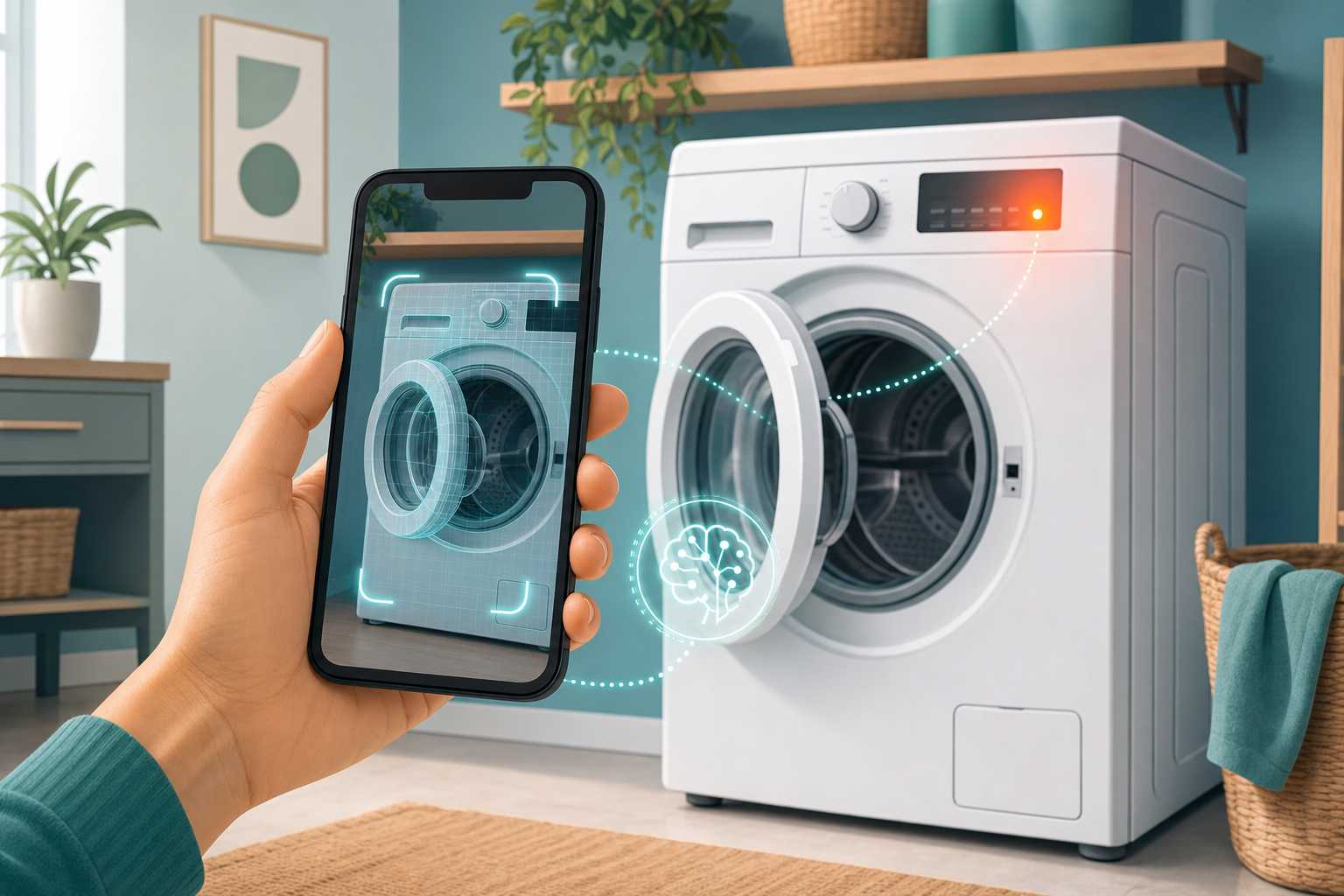
A dryer stops heating on a Tuesday morning. The homeowner googles "appliance repair near me," gets four results, and calls the first three. Two go to voicemail. The third picks up, asks her to describe the noise it's making, can't give her a price over the phone, and books a diagnostic visit for Thursday. By the time a technician actually shows up, she's already texted a neighbor asking who they used last time.
That's not a bad shop. That's a completely normal Tuesday for the appliance repair industry, and it's the exact gap this build closes.
The fix is a working blueprint: Appliance Repair, AI Photo Diagnosis & Instant Repair Quote Tool turns a photo of the broken appliance into a real diagnosis and a real price range in under two minutes, no phone call required.
The problem, specifically
Appliance repair runs on a strange amount of guesswork for an industry built entirely on fixing physical objects. A customer calls, tries to describe a noise, a leak, or an error code they can't quite read, and the person on the phone has to build a mental picture from secondhand description. Most shops can't quote off that. So they schedule a diagnostic visit, charge $60 to $100 for it, and only find out what's actually wrong once a technician is standing in the kitchen.
That's expensive for everyone. The homeowner waits days for a price. The shop sends a technician out cold, sometimes without the right part on the truck, because no one knew what they'd find until they got there. And the moment the first available company gets to answer the phone starts to matter more than the moment they're actually the best fit for the job, because whoever picks up first gets the booking.
Lead costs have made this worse, not better. Google's Local Services Ads for appliance repair contractors are running around $45 a charged lead as of September 2026, up from roughly $20 a year earlier, close to a 70% jump in twelve months. A shop paying that much per lead and then losing the booking to a faster-answering competitor is burning money on a problem that has nothing to do with ad targeting.
How the blueprint actually works
The customer picks their appliance type and brand, checks off whatever symptoms match (won't start, won't drain, not cooling, error code showing, whatever applies), and uploads one to three photos or a short video. That's it for input. No phone call, no waiting for someone to be available to take one.
Behind the scenes, a vision-capable AI model looks at the photos the way an experienced technician sizes up a job before deciding what to bring in the truck. It's not a generic "what's wrong with this" prompt. The instruction tells the model exactly what to look for on a given appliance type: error codes and lights on a display, where a leak is actually coming from, visible damage or wear, loose or disconnected components, burn marks near anything electrical. It cross-references what it sees against the reported symptoms and a baked-in reference table of real 2026 repair costs by appliance type and typical failure.
The output isn't just a number. It's a plain-English diagnosis a homeowner can actually understand, a confidence rating (High, Medium, or Low based on how clear the evidence actually is), and for older units with a major-component diagnosis, an honest note that replacement might be worth considering instead of repair. If anything in the photos suggests a gas connection issue or exposed wiring, it flags that explicitly and skips straight to booking an in-person visit rather than guessing at a price on something that isn't safe to diagnose remotely.
The part that matters most, and the part most worth reading closely in the actual build, is what happens when the photos aren't good enough. A lot of AI-quoting tools guess anyway without saying so, and present a confident number regardless of how thin the evidence actually is. This one doesn't. When confidence comes back Low, whether from a dark photo, a bad angle, or symptoms that don't clearly match a known pattern, it skips the price range entirely and routes the customer straight to booking a diagnostic visit for a flat fee, credited toward whatever repair follows. Honest uncertainty here is worth more than a wrong number, because a wrong number is the thing that turns a Tuesday-morning lead into a one-star review on Thursday.
A worked example
Picture a client called Reliable Appliance Repair, working out of Columbus, Ohio, with a $79 diagnostic fee and a $49 booking deposit.
A customer's dryer stopped heating. She picks Dryer, Whirlpool, 5-10 years old, checks "not heating" and "making noise," and uploads two photos: one of the lint trap area, one of the exhaust vent hose, mostly disconnected from the wall. The AI comes back High confidence: a disconnected exhaust vent is restricting airflow and likely tripping a thermal safety cutoff, which reads to the homeowner as "not heating." Estimated fix: $100-$180, on the lower end of the typical dryer repair range. She books a next-day slot and pays the $49 deposit.
Same week, a different customer uploads a blurry photo of a refrigerator's interior taken from across the kitchen, no visible display, no clear symptom beyond "seems warmer than usual." Confidence comes back Low. No price range shown. Instead: a technician can confirm on-site for the $79 diagnostic fee, credited toward any repair approved. She books anyway, because the alternative was calling three more shops and getting the same non-answer from all of them.
Both leads land in Reliable's dashboard fully documented: photos, the AI's full reasoning, the price range or diagnostic-fee note, contact details, and the booked slot. A technician can glance at the dryer job before leaving the shop and already know it's probably a vent issue, not a $600 heating element, and bring the right part.
What actually goes wrong in week one
Worth being honest about this instead of glossing past it. The AI is going to be more reliable at spotting the general category of problem than it is at nailing the exact dollar figure in the first couple of weeks, which is exactly why the build includes a two-week supervised pilot where every quote gets a human glance before the customer sees it.
Photo quality from real customers is the other early friction point, and it shows up more than it might seem like it should on paper. Some people will photograph the whole appliance from six feet away instead of the actual fault. That's fine. It's what the Low-confidence path exists for, and it still produces a booked lead, just without a false-confidence price tag attached to it.
Who should build and sell this
This fits an agency or freelance builder already working with local service businesses, or someone looking to start in that lane. The buyer is an independent or small-chain appliance repair company doing $15,000 to $60,000 a month, quoting over the phone today, feeling the Local Services Ads price increase directly in their monthly ad spend. Find them through Google Maps searches for "appliance repair" plus a city name, in local Facebook groups for home service businesses, and among the shops currently running Local Services Ads listings, since those are the ones already paying real money for leads and most likely to notice a tool that improves how many of those leads actually convert.
The pitch is short. Ask how a customer currently gets a price from them. If the answer involves a phone call and a scheduled diagnostic visit before any number gets said out loud, show them a photo-to-price flow that takes under two minutes and still books a deposit-paid slot even when the photos aren't clear enough to quote confidently.
The economics
Setup for the appliance diagnosis tool runs $2,500 to $4,000 for the build and onboarding. The monthly retainer of $297 to $497 covers hosting plus the OpenAI, Twilio, and Stripe usage costs, along with ongoing tuning of the pricing table as real diagnoses come in and the client's local market rates get dialed in. There's a performance option worth offering too: knock $500 to $1,000 off the setup fee in exchange for a flat $15 to $25 fee per confirmed booking generated through the tool for the first six months. Appliance repair jobs run $100 to $1,000 depending on the appliance, with refrigerator repairs averaging around $650, so a shop booking even a handful of jobs a week through the tool clears that performance fee easily, and your payout stays tied to bookings that actually happen, not a one-time build fee collected and forgotten.
Average job value through the tool sits at $100 to $1,000 depending on appliance type, with washer and dryer repairs clustering around $180 and refrigerator repairs running highest at $300 to $1,000. Even a modest lift in booking conversion, catching the customer who'd otherwise have called two more shops before anyone answered, pays for the monthly retainer many times over.
Why this isn't just another quote calculator
Plenty of tools let a customer answer a few dropdown questions and spit out a price range. That alone doesn't solve the actual problem, because a generic quote calculator has no idea what's actually wrong with the appliance in front of the customer. It's guessing off symptoms with no visual confirmation, which is exactly the kind of guessing that gets a repair shop a technician standing in a kitchen without the right part.
The photo-based diagnosis is the actual product. Anyone can build a form with a price range at the end. Building one that looks at the actual evidence, admits when that evidence isn't good enough, and routes accordingly instead of forcing a confident number out of a blurry photo, is the part that makes this genuinely useful instead of a slightly fancier calculator.
Setting expectations with the client
Part of selling this well is being straight about what it does and doesn't replace. It doesn't replace a technician's in-person judgment, and it isn't supposed to. What it replaces is the dead time between "something's broken" and "someone with the right skills knows roughly what it'll cost to fix," which is the actual gap costing shops bookings right now. Set the two-week pilot expectation up front, so the first handful of quotes needing a manual adjustment reads as the system working as designed, not as it failing.
Why a real app, not just a web link
The build's launch playbook wraps the finished tool as a native app through AppBuild.DIY rather than leaving it as a bookmarked website, and that step matters more than it looks like it would on paper. A customer trusts an app icon on their home screen more than a link buried three scrolls deep in their browser history from three months ago. Push notifications for booking confirmations and appointment reminders get opened at a noticeably higher rate than a text or email competing with everything else in an inbox. Enabling the Photos/Camera capability also means customers upload straight from their native camera instead of a clunky browser file picker, which shows up in cleaner, better-lit photos and, in turn, more High-confidence diagnoses.
Why now
Vision-capable AI models became good enough at this kind of visual triage recently enough that most appliance repair shops, still small, still often family-run, haven't caught up to what's possible yet. Meanwhile, lead costs in this exact category jumped nearly 70% in a single year, which means the shops paying for those leads are actively feeling pressure to convert more of what they're already paying for, not just generate more volume. The businesses that add instant photo diagnosis first in their local market get to be the shop that answers in two minutes with a real number, while everyone else is still asking customers to describe a noise over the phone.
Get started
The full build, the exact vision-diagnosis prompt with its reference cost table, the 10-step build playbook, and the step-by-step launch guide covering everything from Twilio's A2P 10DLC compliance step to the AppBuild.DIY wrap are all in the blueprint itself, ready to paste into Lovable and adapt for a first client this week. Nothing in it requires knowing how to code, and nothing in the pitch depends on the client understanding how any of it works under the hood. They just need to see a customer get a real price off a photo in under two minutes.