The Release Sold Out Before Their Own Mug Club Members Saw the Post
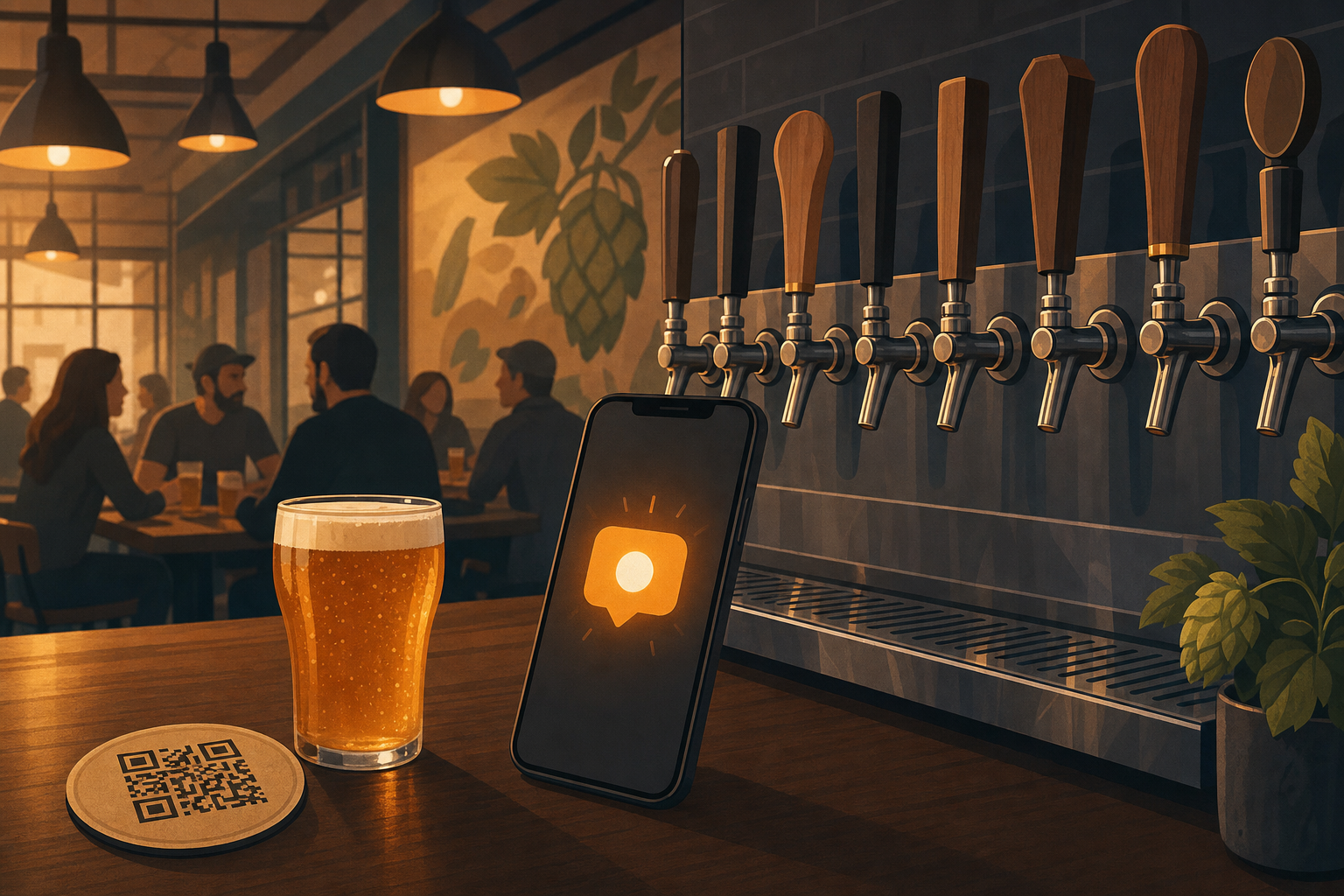
A brewery posts a new limited release on Instagram at 2pm on a Thursday. By the time most of their mug club regulars actually see the post, buried under everything else in their feed, the release has already sold out to whoever happened to be scrolling at the right moment. The brewery did the marketing. The regulars, the people who actually paid for a mug club membership specifically to feel like insiders, found out last.
That's not a marketing failure exactly. It's a channel problem. Social media was never built to guarantee your most loyal customers see something first.
The fix is a working blueprint: Craft Breweries, Digital Mug Club & Release-Drop Alert System replaces the mug-on-a-shelf loyalty model with something that actually tracks who's coming back and guarantees members hear about a release before anyone else.
The problem, specifically
Craft brewery loyalty runs on two things most breweries manage almost entirely by feel: knowing who's actually coming back, and getting release news in front of the right people at the right moment. Neither is a small problem. Industry data puts the 30-day return rate for taproom customers at around 24%, meaning roughly three out of four first-time visitors don't come back within a month without something actively pulling them in. And the classic 80/20 pattern holds here too, 80% of revenue tends to come from 20% of customers, which makes it strange how little data most breweries actually have on who those customers are and when they start drifting away.
A physical mug club card doesn't solve either problem. It's a nice tradition, but it doesn't track visits, doesn't flag when a regular hasn't been in for six weeks, and does nothing at all to get release news in front of members ahead of the general public. Meanwhile digital loyalty approaches built on real visit data show 15-25% lifetime-value uplift and up to 70% higher retention compared to the traditional physical-card model, not because digital is inherently better, but because it actually captures the data a mug on a shelf never could, and turns that data into an actual next action rather than a number no one looks at.
How the blueprint actually works
Members sign up once and get a QR code, no physical mug required, though a brewery can still keep the tradition alongside it. Staff scan it at the bar, logging a real visit history instead of relying on a bartender recognizing a regular's face. A daily check watches that data for two things: anyone crossing a drift-risk threshold (default 30 days, matched directly to the industry's own return-rate benchmark) gets a warm, AI-personalized re-engagement message, and anyone close to finishing the core-lineup achievement gets a specific nudge naming exactly what's left to try.
The release-alert half is where this earns its keep fastest. When the brewery posts a new release in the dashboard, mug club members get a real early-access window, a set number of hours before the general public announcement, with an option to reserve a bottle or case if the release supports pre-orders. That's the difference between "hopefully our regulars see the Instagram post in time" and "our regulars get a text the moment it drops, with time to actually act on it before anyone else even knows."
The achievement system adds a second, quieter pull. Tracking progress through the core lineup and flagging when someone's one or two styles from completing it taps into something the craft beer community already does informally through apps like Untappd, just pointed directly at this specific brewery's own lineup, with a real reward on completion instead of just a badge.
A worked example
Picture a client called Ironroot Craft Brewing in Portland, with a 30-day drift-risk window and a 24-hour early-access window on releases.
A member who joined three months ago and visits most weekends suddenly doesn't show up for five weeks. The system flags her as drift-risk and sends a message referencing her favorite style on file: "Haven't seen you in a bit, we've got a new batch of the hazy IPA you always go for, come say hi." She stops in that weekend.
Same week, the brewery posts a new barrel-aged stout, limited to 200 bottles. Mug club members get the alert 24 hours before the public announcement, with a reserve option. By the time the general public post goes up the next day, half the allocation is already spoken for by members who got there first, exactly the kind of insider access a mug club membership is supposed to actually deliver.
A third member checks the app and sees she's one style away from completing the core lineup, a nudge names the exact beer she hasn't tried yet. She orders it on her next visit specifically to finish the set.
A fourth case shows the system working in the background rather than firing: a longtime member who visits every Friday without fail gets no automated messages at all that week. The logic is deliberate, not a gap. Over-messaging someone who's already showing up consistently trains members to tune out notifications entirely, which is exactly the failure mode that makes generic loyalty-app blasts feel worthless after the first few weeks. Staying quiet with an engaged member is as much a design decision here as reaching out to a drifting one.
What actually goes wrong in week one
Worth naming honestly. Message tone matters more here than the tracking logic itself, which is simple and reliable once visits are being scanned consistently. A re-engagement message that reads as a loyalty-program bot noticing an absence lands badly; one that references a real favorite style and sounds like an actual person at the bar lands well. That's exactly why the 2-week supervised pilot matters, tuning tone against how this specific brewery's community actually talks, taproom regulars have their own vocabulary and inside jokes that a generic template will never capture, before the system runs fully hands-off.
Who should build and sell this
This fits an agency or freelance builder already working with local hospitality and food-and-beverage businesses, or someone starting there with the brewery build as a first client win. The buyer is an independent craft brewery with an active taproom and either a physical mug club already or no formal loyalty program at all. Find them via Google Maps searches for "brewery" or "taproom" plus a city name, craft beer owner Facebook groups and forums, and breweries actively promoting limited releases on social media, since they're already doing the marketing work a real alert system would make dramatically more effective.
The pitch is direct. Ask how they currently make sure mug club members hear about a release before the general public. Most answers involve hoping a social post gets seen in time. Show them a system that guarantees it instead. Bring a real example if you can, the Pliny the Younger phenomenon, hours-long lines for a beer that's only ever sold at the brewery, is the extreme version of exactly what this build is designed to capture at a much smaller, everyday scale.
The economics
Setup for the mug club system runs $2,500 to $4,000 for the build and onboarding. The monthly retainer of $297 to $497 covers hosting plus the OpenAI and Twilio usage costs, along with tuning the drift-risk window and message tone as real visit data comes in. A performance option is worth offering too: knock $500 to $1,000 off the setup fee in exchange for a flat $5 to $10 fee per new mug club sign-up generated through the tool for the first six months, tying your payout directly to membership growth.
Mug club memberships typically run $50 to $250 a year, averaging around $100-150, and that's before counting the increased per-visit spend from members who are actually coming back more often instead of drifting away with no one noticing. A brewery with 150-200 active members recovering even a modest share of the roughly 76% who'd otherwise not return within 30 days represents real, ongoing taproom revenue that a physical mug club was never built to protect.
Run the math on a mid-size taproom with 200 members: even a conservative 15-point improvement in 30-day return rate, well inside the range digital loyalty programs in this category report, means roughly 30 additional monthly visits that wouldn't otherwise have happened, each with a real tab attached. That's before counting what a guaranteed early-access window does for release-day sell-through, which is where breweries running this tend to see the fastest, most visible return.
Why this isn't just another loyalty app
Plenty of apps offer digital punch cards. That alone doesn't solve the real problem, because a digital punch card still doesn't guarantee a member hears about a limited release before it sells out, which is the actual thing that makes a craft brewery mug club feel worth the annual fee. The release-alert mechanism, paired with real drift-risk tracking instead of a bartender's memory, is what turns a generic loyalty app into something built specifically around how this industry actually creates urgency and community.
Setting expectations with the client
Part of selling this well is being honest about what changes and what doesn't. It won't replace the genuine relationship between staff and regulars, and it isn't meant to. What it reliably does is catch the members who are drifting before a bartender would notice on their own, and make sure release-day insider access is a real guarantee instead of a hope. Set the pilot-period expectation up front so early message tone needing adjustment reads as the system working as intended.
Why a real app, not just a QR code
The build's launch playbook wraps the finished tool as a native app through AppBuild.DIY rather than leaving it as a bookmarked web link. Push notifications are the single highest-value feature in this entire build, a member who misses a limited-release alert misses the release entirely, so getting that notification in front of them reliably matters more here than almost any other build in this library. Enabling Push Notifications as the primary Native Capability means release-drop urgency actually reaches members the moment it matters, not whenever they next happen to check email.
Why now
The retention and release-alert math behind this has been understood in the craft beer industry for a while, what's changed is that a genuinely personalized, automated version of it is now accessible to a single independent brewery rather than only the larger regional players with dedicated loyalty platforms. Breweries that build a real digital mug club first in their local market get to be the ones with the shortest lines and the fastest sell-throughs on release day, while competitors are still hoping a social post gets seen in time before the moment passes.
One more thing worth saying plainly to a skeptical brewery owner: this doesn't replace the actual relationship between staff and regulars, the thing that made mug clubs work in the first place. It's a layer underneath that relationship, making sure the data that used to live entirely in a bartender's memory gets captured and acted on, so the personal touch has something real to work from instead of a guess about who's been in lately.
Get started
The full build, the exact re-engagement and release-alert logic, the 10-step build playbook, and the step-by-step launch guide covering everything from Twilio's A2P 10DLC step to the AppBuild.DIY wrap are all in the blueprint itself, ready to paste into Lovable and adapt for a first client this week. Nothing in it requires knowing how to code, and nothing in the pitch depends on the brewery understanding what's happening under the hood, only that the results are visible in their own taproom within weeks. They just need to see their next limited release sell through to members before the general public even knows it dropped, and watch the return-rate number move in the weeks after.