
Branding & Design Agencies, AI Brand Identity Brief Generator from Client Assets
Clients upload their logo, current marketing, competitor sites and inspiration images. AI vision pulls the real hex palette, type style, imagery and tone, compares them against competitors and drafts a full brand identity brief with visual directions, scope and a client approval link.
This blueprint is free. Copy the master prompt below, build it with your own time, and the only outlay is a few low-cost tool subscriptions. Use it inside your own business, or sell it to clients. The numbers further down are what you can charge, not what you pay.
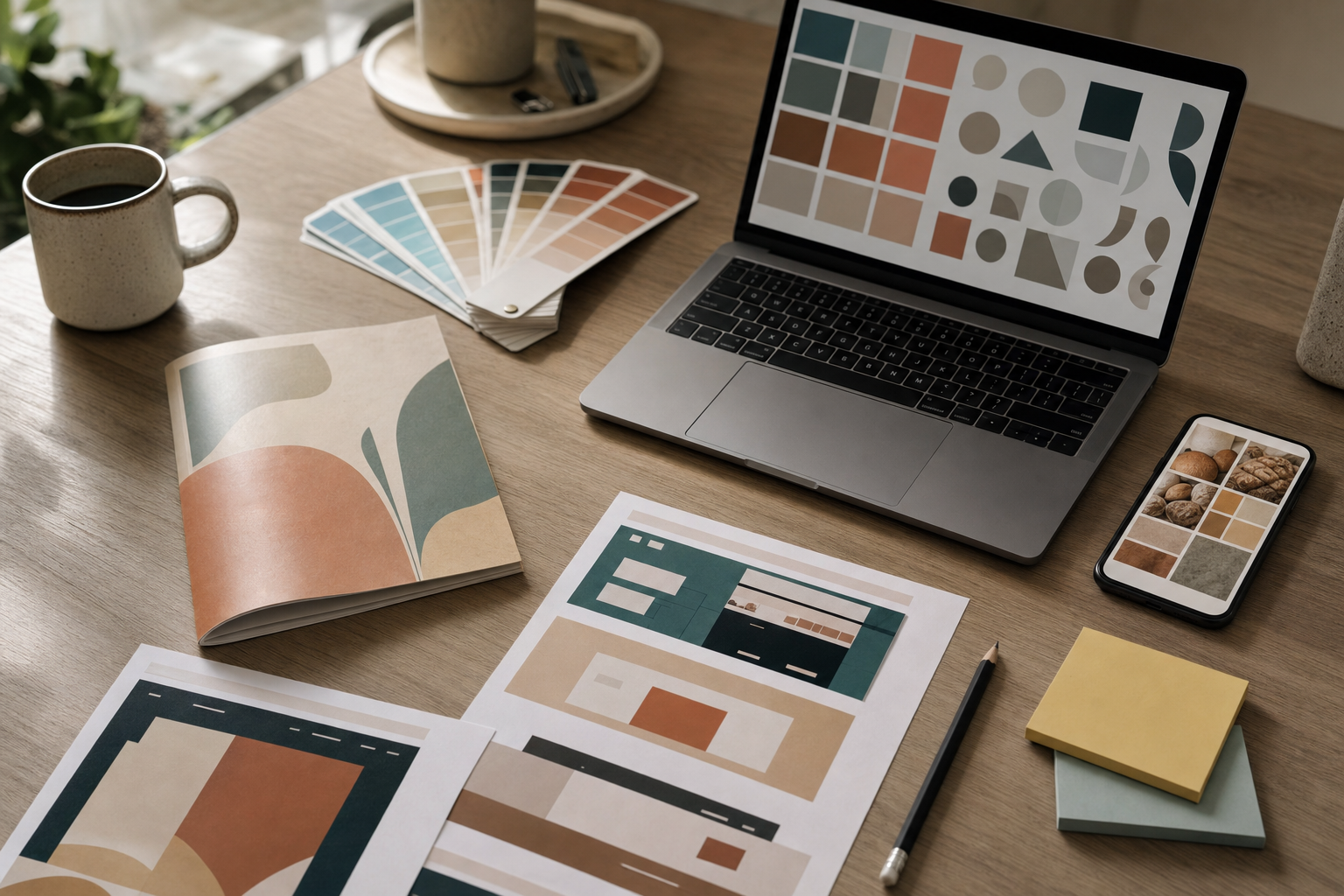
AI Design Brief Generator for Branding Agencies: From a Shoebox of Old Logos to a Signed-Off Brand Brief
Read the articleWho you sell it to
Independent branding agencies and graphic design studios with 2-15 people, plus busy freelance brand designers who run 2 or more identity projects a month. They're easy to find: Clutch, Dribbble and Behance list thousands of them with portfolios, team size and typical project budgets, and most post their process publicly (look for anyone describing a 'discovery' or 'brand audit' phase). The best fit is a studio selling packaged identity work in the $5,000-$20,000 range, because that's where kickoff admin hurts most: the fee is fixed, but chasing assets, auditing the old brand and writing the brief eats senior hours before any design starts.
Agencies charging $100-$149 an hour (Clutch's average branding rate) feel every wasted hour. You can also build it for your own studio and use it as a sales tool, since a client who sees a sharp, evidence-backed brief inside 48 hours of signing is far less likely to haggle on the next invoice.
If you sell it, here is the money picture:
The first tile is the value of your client's own jobs, which is the reason they will pay you. The other two tiles are what you charge them.
How it works
The designer creates a project and sends the client a magic link. On their phone or laptop, the client drops in their current logo, brochures, social posts, packaging and shopfront photos, up to 6 competitor websites and up to 20 images of brands they love, then answers 10 short questions. When they hit submit, the app gets to work.
First it pulls the exact hex colours out of every image with plain maths (vision models guess colours badly, so the app doesn't let them). Then a vision model reads each asset for type style, imagery, layout problems and the actual words used, and scores the tone of voice with quoted evidence. It screenshots each competitor site, extracts their colours and spots the visual habits the whole category shares, plus the colour territory no competitor owns.
All of that becomes a 12-section brief: brand audit, audience, archetype, positioning statement, tone of voice, 3 distinct visual directions with palettes, Google Font pairings and contrast checks, a do and don't list, moodboard direction (with optional AI mood images), deliverables and scope from the agency's own packages, and a list of contradictions to settle on the kickoff call. The designer edits and locks sections, then shares a branded link where the client approves section by section, votes on directions and signs off with their name.
What to expect
Expect the first pass of a brand audit and brief in about 10-20 minutes of processing instead of the day or two of senior time it normally takes to sort assets, sample colours and write it up. The designer still reviews every section (budget 45-90 minutes per brief), and the tool is built so nothing reaches the client unreviewed. The strongest wins are usually the evidence: real hex values from the client's own materials, quoted copy showing their tone drifting, and a competitor colour map that ends the 'can we make it blue?' conversation early.
Font matches are reported as 'likely' matches, and AI moodboard images carry a clear 'mood reference' label. Running costs are small: OpenAI vision calls for a typical 20-30 image intake cost well under a few dollars, and gpt-image-2 mood images run roughly $0.04-$0.17 each depending on quality. Plan on 2-3 weeks from signing to a live tool, then 3 supervised kickoffs before the studio trusts it.
Shipping it as a real app via AppBuild.DIY means clients get a push notification the moment the brief is ready, which shortens the approval loop that usually stalls projects for a week.
Master prompt
You are an expert full-stack builder. Build a production-ready tool that… (the complete master prompt, custom input fields, build phases, pricing guidance and sales script are part of this blueprint.)
Build phases
Required tools
Lovable
Supabase
Database, client file storage, auth and edge functions that hold the API keys
Free to start; Pro $25/month (100GB storage, no pausing)
Sign upOpenAI API
Vision analysis of logos, materials, competitors and inspiration, brief writing, and optional gpt-image-2 mood images
Pay as you go; gpt-image-2 about $0.04 (medium) to $0.17 (high) per 1536x1024 image
Sign upScreenshotOne
Captures competitor websites for the visual comparison
Free for 100 screenshots/month; Basic $17/month for 2,000
Sign upResend
Branded intake invites, reminders, brief-ready and approval emails
Free for 3,000 emails/month; Pro $20/month for 50,000
Sign upAppBuild.DIY (Vibes)
Wraps the finished web app into native iOS and Android apps plus a PWA; enable Push Notifications and the Photos/Camera plugins for phone-based client uploads
Start free; store publishing on paid plans
Sign up