
Tree Services, AI Photo Hazard Assessment & Instant Quote Tool
Homeowners photograph a tree from their phone and get an instant quote range for removal, trimming, or stump work, with storm and emergency jobs automatically flagged and pushed to the top of the dispatch queue for a fast callback.
This blueprint is free. Copy the master prompt below, build it with your own time, and the only outlay is a few low-cost tool subscriptions. Use it inside your own business, or sell it to clients. The numbers further down are what you can charge, not what you pay.
The Tree On The Roof Was Caller Number Twenty-Two
Read the articleWho you sell it to
Tree service and arborist companies handling residential removal, trimming, and storm cleanup, currently quoting almost entirely through in-person site visits and losing fast-moving storm jobs to whoever calls the homeowner back first.
If you sell it, here is the money picture:
The first tile is the value of your client's own jobs, which is the reason they will pay you. The other two tiles are what you charge them.
How it works
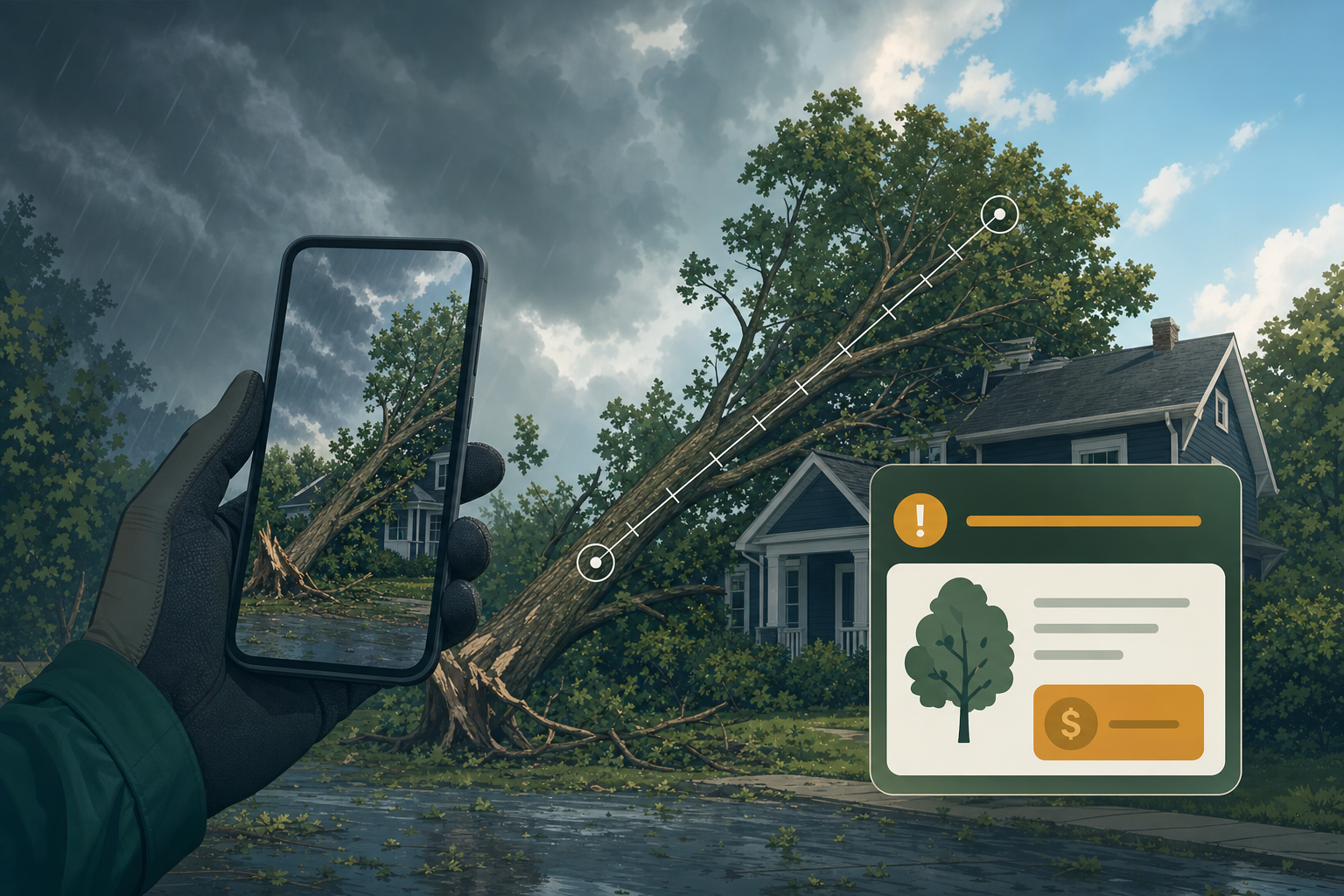
A homeowner photographs the tree with a visible reference object for scale, marks the job routine or emergency, and gets an instant quote range built from the company's own pricing bands, never a binding price. Photos that are blurry, missing a reference object, or show a genuinely hazardous situation skip the instant number entirely and route straight to a scheduled on-site visit. Storm and emergency jobs jump to the top of the dispatch queue and trigger an internal alert so the company's callback clock starts the moment the photo lands, not whenever someone checks the inbox.
The crew still confirms the final price on-site before any work starts. The tool just speeds up the first number.
What to expect
The photo-estimation logic deserves the most build attention, since a height guess without a reference object is unreliable, and a confidently wrong instant quote does more damage to trust than routing to an on-site visit would have. Be strict about the reference-object requirement and the low-confidence fallback rather than trying to make the AI estimate every photo. Test the storm-triage queue specifically with a burst of simultaneous submissions, not one at a time, since the real value shows up on a bad-weather day when dozens of requests land within an hour and the company needs the truly urgent ones surfaced first.
Expect the on-site confirmed price to differ from the instant quote range on a meaningful share of jobs early on, that gap should shrink as the pricing bands get calibrated during the pilot, not stay flat. Once the base build works, common follow-up requests include crew route optimization for the day's scheduled jobs, a repeat-customer discount or referral program, and a simple before/after photo gallery the company can use in its own marketing.
Master prompt
You are an expert full-stack builder. Build a production-ready tool that… (the complete master prompt, custom input fields, build phases, pricing guidance and sales script are part of this blueprint.)
Build phases
Required tools
Twilio
SMS callback alerts to dispatch and status updates to customers
~$0.0079/SMS in the US, phone number ~$1.15/month
Sign upStripe
Supabase
AppBuild.DIY (Vibes)
Wraps the finished build into native iOS/Android apps and a PWA with push notifications and a native Photos/Camera capability for reference-object photo capture
Free to start, paid tiers from $49/month
Sign up