
Water Damage Restoration, AI Photo Damage Assessment & Insurance Documentation Tool
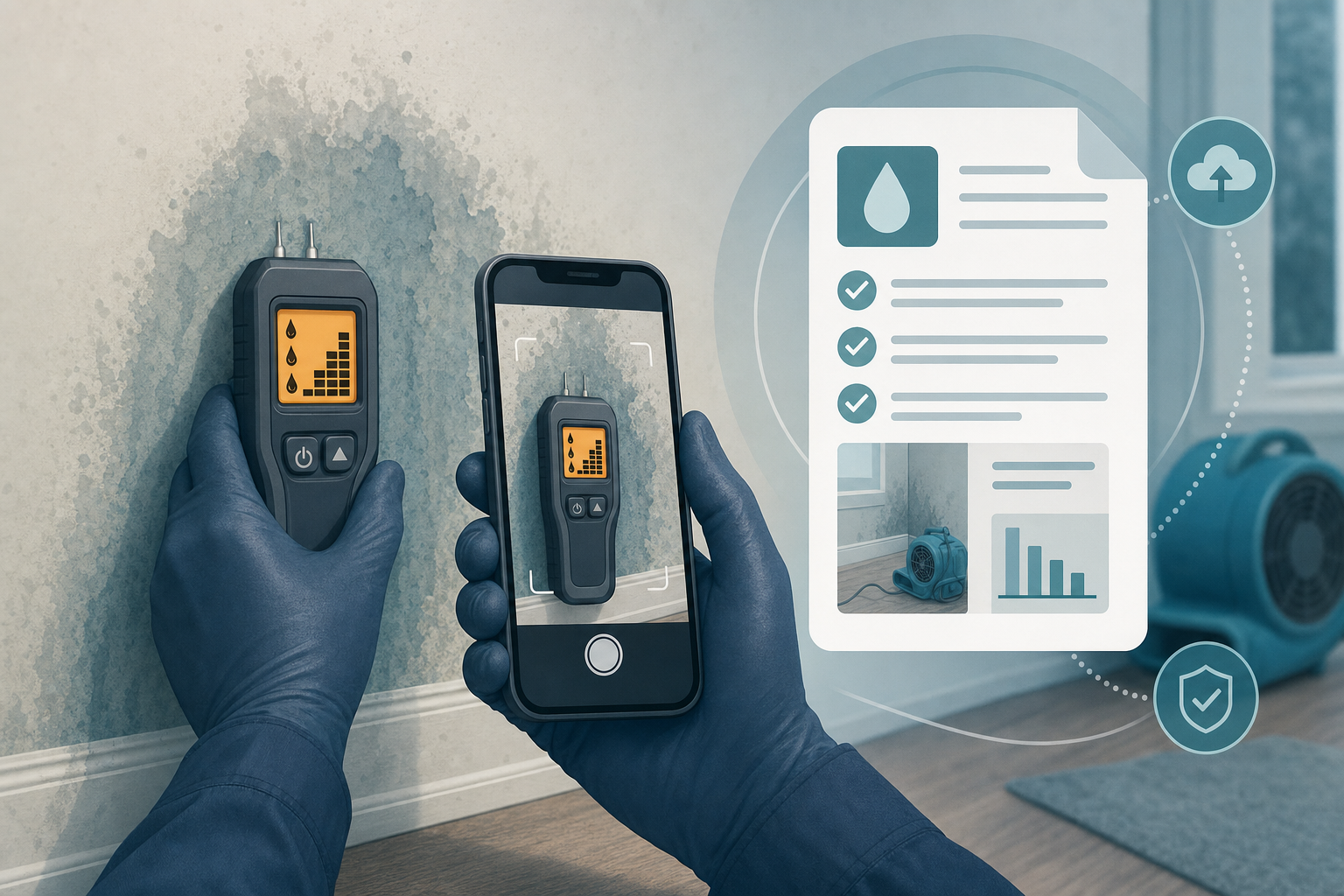
Homeowners photograph water damage the moment it's found and get an instant urgency triage instead of a blind price, while crew moisture readings and drying photos get compiled automatically into an insurance-ready claim report as the job proceeds.
This blueprint is free. Copy the master prompt below, build it with your own time, and the only outlay is a few low-cost tool subscriptions. Use it inside your own business, or sell it to clients. The numbers further down are what you can charge, not what you pay.
The Insurance Claim That Took Six Weeks Because The Photos Were On Someone's Phone
Read the articleWho you sell it to
Water damage restoration and mold remediation companies currently building insurance documentation by hand from scattered phone photos and paper logs, and losing the fastest-moving emergency jobs to whoever responds first inside the 24-48 hour mold window.
If you sell it, here is the money picture:
The first tile is the value of your client's own jobs, which is the reason they will pay you. The other two tiles are what you charge them.
How it works
A homeowner or first responder photographs the damage and answers a few questions about the water source and timing, and the app returns an urgency tier, not a price, since this industry documents rather than quotes blind. Jobs near or past the mold window, or involving contaminated water, jump to the top of the dispatch queue automatically. On-site, crew photograph every moisture reading with the meter and the material in the same frame, matching standard restoration documentation practice, building a day-by-day drying log the app compiles into a shareable insurance report the moment the job's marked complete.
What to expect
The moisture-reading discipline is what makes or breaks this build, since the meter-and-material photo pairing is the whole point of the documentation. Be strict about rejecting readings that don't clearly show both, a shortcut here undermines the entire insurance-report value proposition. Test the drying-progress view with a genuinely stalled room (a reading that doesn't improve day over day), since surfacing that clearly to crew and dispatch is one of the more useful parts of the build and easy to skip if you only test the happy path.
Expect the first few real jobs to reveal formatting preferences the client's usual adjusters expect that weren't obvious during the build, plan to adjust the report template during the pilot rather than treating the first version as final. Once the base build works, common follow-up requests include a client-facing status page homeowners can check without calling for updates, multi-language support for crew documentation notes, and integration with whatever accounting software the company already uses for invoicing insurance payouts.
Master prompt
You are an expert full-stack builder. Build a production-ready tool that… (the complete master prompt, custom input fields, build phases, pricing guidance and sales script are part of this blueprint.)
Build phases
Required tools
Twilio
Emergency dispatch alerts and customer status updates
~$0.0079/SMS in the US, phone number ~$1.15/month
Sign upSupabase
Job data, moisture readings, and photo storage
Free tier available, ~$25/month for production use
Sign upPDF generation service
Compiles the final insurance report from photos and readings
Free tier available on most libraries/APIs, ~$0-20/month depending on volume
Sign upAppBuild.DIY (Vibes)
Wraps the finished build into native iOS/Android apps and a PWA with push notifications and a native Photos/Camera capability for moisture-reading photo capture
Free to start, paid tiers from $49/month
Sign up